Classic French white bread
A recipe from cooking-ez.com October 15th 2026324 K4.3
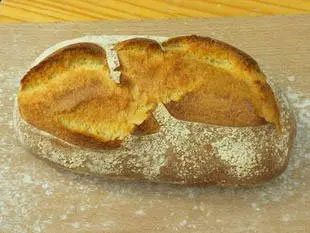
For 4 loaves, you will need:
- 1 1 kg plain white flour (French Type 65)
- 2 620 ml water
- 3 18 g fine (or table) salt
- 4 15 g yeast
- 5 100 g Soured dough (optional)
- Total weight: 1,655 grams
Times:
| Preparation | Resting | Cooking | Start to finish |
|---|---|---|---|
| 40 min. | 2 hours 30 min. | 40 min. | 3 hours 50 min. |
Step by step recipe
- 1: Put into a food-processor bowl: 1 kg plain white flour (French Type 65), 18 g fine (or table) salt, 15 g yeast and, if possible, 100 g Soured dough.
- 2: In bread-making, the water temperature is always important. It's not a fixed value, but related to 3 other temperatures: 1) the temperature of your flour, 2) the room temperature in your kitchen, and 3) the basic temperature of this recipe, which is 48-52°C.
You can calculate the temperature of the water for this recipe in one click, using this small calculator. - 3: Add 620 ml water at the right temperature, then knead on the slowest speed until the ingredients are well mixed (about 3 minutes).
Note: For the best way to knead, see: A few tips for effective kneading at home. - 4: Knead a little faster (the next speed up) for around 15 minutes, until the dough temperature reaches 24°C (75°F).
You could also chech the dough by trying the window-pane test. - 5: Tip the dough out onto a lightly floured worktop.
- 6: Gather the dough into a ball and transfer to a large, clean bowl. Cover with a sheet of plastic.
Leave to rest for 15 minutes. - 7: After this time, tip the dough onto a lightly floured worktop and cut into pieces of about 500g each.
- 8: You can weigh each piece to check, as it is not easy to do this by eye.
Note: using the quantities stated, you can expect to obtain 1750 g of dough, to divide up as you choose. - 9: Form each piece of dough into a ball.
As the gesture for doing this is difficult to describe, you can see it in the short video on the right. - 10: Place the balls of dough on the floured worktop, dust the tops with flour and cover with a sheet of plastic.
Leave to rest for 15 minutes. This allows the dough to "relax". - 11: Shape the loaves.
As the gesture for doing this is difficult to describe, you can see how it is done in the short video on the right. - 12: Place each loaf in a banneton (French raising basket), dusting the bottom generously with flour first.
Cover with a sheet of plastic and leave to rise for 2 hours. - 13: Preheat the oven to 240°C (460°F).
Turn the loaves over onto the peel (for a wood-fired oven) or onto a baking sheet (for a conventional oven), slash the tops and bake... - 14: ...for 30 to 40 minutes.
Note: As when baking any bread, you should ensure that the oven is filled with steam for the first 15 minutes of baking. This page shows you how; it really is the secret of golden-brown, crusty loaves.. - 15: You will notice how the holes in the bread are regular in size. This comes from the action of the yeast which, unlike leaven, produces even bubbles.
Remarks
You might also like to take a look at this page about making your own bread.View this recipe : https://cooking-ez.com/four/recipe-classic-french-white-bread.php
October 19th 2026.