This site uses only a few technical cookies necessary for its operation. By continuing to browse, you accept their use.
To find out more...
To find out more...
A stable cutting board
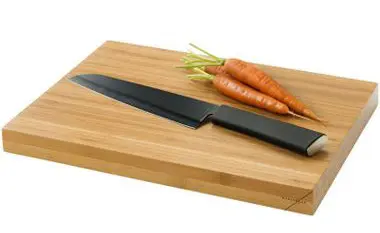
As soon as you have something to cut in the kitchen, the best thing to do is to use a cutting board, it protects your table or work surface, and their material is made to protect the edge of your knife, that is to say that it is soft enough, in short it is the ideal thing.
But simply put on the work surface, they have an annoying tendency to move.
But simply put on the work surface, they have an annoying tendency to move.
10 K 5/5 (15 reviews)
Keywords for this post:TipTrickMaterialBoardCuttingKnifeLast modified on: May 22th 2021
A stable cutting board
This is especially the case if you have a quality one, but it's sometimes the case for slightly cheaper boards, you've noticed that they don't have legs, they're really "boards", in the sense: a rectangular piece without really a top or bottom.
And as a result, when you put it on your work surface, you have an almost immediate soapy effect, it slides or moves as soon as you start cutting on it, which is quickly a pain in the ass.
How to avoid this ?
Very simple, do as the pros do: Fold a cloth in half and slide it under your board, don't let anything stick out. The cloth acts as a kind of shock absorber that prevents the board from slipping, it remains firmly in place throughout your cuts.
In short: To prevent your cutting board from moving during your cuts, slide a cloth folded in half underneath.
And as a result, when you put it on your work surface, you have an almost immediate soapy effect, it slides or moves as soon as you start cutting on it, which is quickly a pain in the ass.
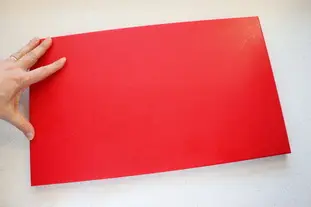
How to avoid this ?
Very simple, do as the pros do: Fold a cloth in half and slide it under your board, don't let anything stick out. The cloth acts as a kind of shock absorber that prevents the board from slipping, it remains firmly in place throughout your cuts.
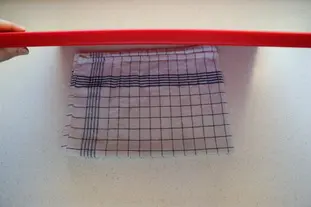

In short: To prevent your cutting board from moving during your cuts, slide a cloth folded in half underneath.
Lasts posts

Cut twice as fast
When you need to cut something long into small pieces, for example chopped chives or the stem of a spring onion, there's a simple gesture that doubles your cutting speed. Let's see how.May 21th 20261,827

The other use for bowl scraper
Your kitchen or bakery utensils may include a horn (left) or a pastry cutter (right). These practical utensils are normally used to scoop the contents of a bowl or salad bowl - the horn - or to cut dough - the pastry cutter. But they also have another, very practical use - let's see what it is.May 9th 20261,688

The strange foam of potatoes in milk
As you may have already noticed, when you cook potatoes in milk, especially in small pieces (slices or cubes) for a gratin for example, a surprisingly abundant white foam forms on the surface. Where does it come from?April 26th 20261,893

A little leftover butter
Very often when you're making a cake, your recipe will tell you to melt some butter and mix it into the batter - a classic for cookies, cakes, moelleux and the like. And every time you do this, you'll have to butter the baking tin to prevent the dough from sticking during baking. Naturally,...April 16th 20261,9815

A tablet holder
Perhaps you too cook by consulting your recipe on a tablet or phone, and putting it down on your worktop? It's practical, but not the best solution. Here's a look at how you can make an inexpensive, almost universal stand.March 14th 20262,4835
Other pages you may also like

Egg whites management
Quite often, in cooking or pastry-making, we have recipes that use only egg yolks: gâteau breton (brittany butter cake), confectioner's custard, spaghetti carbonara, etc. And so, inevitably, we end up with unused egg whites that will have to be used elsewhere, in another recipe, and certainly...June 12th 202112 K4.9

In praise of the whetstone
Have you ever seen a butcher or a chef sharpen his knife before using it? Usually he uses a special tool, a long thin cylinder made of very hard metal. And in a smooth and elegant gesture, he very quickly passes the edge of the knife against the rifle, which makes a very characteristic noise,...June 5th 202113 K4.8


Raising (or leavening) agents
When we want to make a dough or batter rise when baking, either in patisserie or bread-making, we need to use a raising agent or leavening agent, one of which is called leaven. In the context of baking, a raising agent is simply what "makes something rise". It is a substance which, when added to...June 16th 202159 K4.8

Burgers and cheeses
A quick look at burgers(article from 2 weeks ago), and in particular the cheese in burgers, many of you have asked me about this, and how to get cheese to melt in your burgers.April 24th 202111 K4.8
Post a comment or question
Follow this page
Receive an e-mail as soon as this page is modified or receives a new comment.
We'll never share your e-mail address with anyone else.
Alternatively: you can subscribe to the mailing list of cooling-ez.com , you will receive a e-mail for each new recipe published on the site.