Cooking utensils
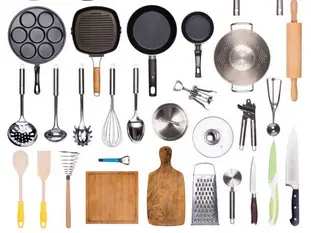
It's a classic observation: It is very difficult, if not impossible, to cook (well) without good utensils, good equipment.
It's something we tend to neglect, especially at the beginning, but let's not fool ourselves : you absolutely need good utensils to be able to achieve the result you hope for with this recipe.
This page presents you the main utensils you might need in the course of your recipes, in 2 main categories: the 10 essentials and the others.
It's something we tend to neglect, especially at the beginning, but let's not fool ourselves : you absolutely need good utensils to be able to achieve the result you hope for with this recipe.
This page presents you the main utensils you might need in the course of your recipes, in 2 main categories: the 10 essentials and the others.
720K 113
Last modified on: September 18th 2022
The 10 essentials tools (I can't do anything without them...)
-
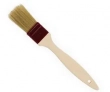 Brush : For coating or glazing with a liquid, water or beaten egg-yolk for example, or for gently removing excess flour or sugar.
 -
 Chopping board : To cut safely, using your knives, on your work surface.
 -
 Knife : It's impossible to cook well without good knives. For cutting of course, but also slicing, chopping, etc.
 -
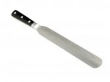 Palette-knife : For moving small items without breaking them, or lifting up pastry without making a hole it.
 -
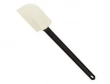 Soft spatula : This is a flexible rubber or plastic spatula, ideal for stirring a preparation that could stick to the bottom of the pan, or for completly emptying a bowl or a pan cleanly without leaving a drop.
 -
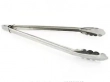 Tongs : For turning something easily during cooking (apple quarters for example), or removing something hot from a pan, and also for serving spaghetti.
 -
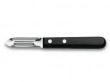 Vegetable peeler : Very useful for peel fruit and vegetables, cuting chocolate or parmesan chips.
 -
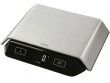 Weighing scales : With it you can weigh everything, even in small quantities (10-20 g, sometimes less).
 -
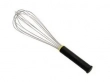 Whisk : For beating (eggs) or whipping (cream) a preparation (like a sabayon for exemple), to mix thoroughly, and especially to incorporate air.
 -
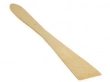 Wooden spatula : To mix, to stir in a saucepan or frying-pan, etc.
Other tools
-
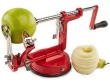 Apple-peeler : Here is a tool that I was sure was just some dumb gadget before my friends Eric and Pascale gave me one! It's an extraordinary tool that peels and removes the core of an apple in less than 10 seconds....
 -
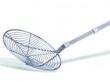 Araignée (spider) : A kind of skimmer, like a shallow wire basket on a long handle. It's ideal for removing something solid from a liquid, like vegetables in water for example.
 -
 Baking sheet : This is a metal sheet or tray, covered with a non-stick coating, similar to the lining of an oven. It can be used for cooking a wide range of things, but mainly small items to be cooked together such...
 -
 Blender : A blender consists of a sort of "propellor" or knife blade, driven by an electrc motor. Ideal for transforming a lumpy mixture into something smooth and homogenized. There are two kinds: classic ble...
 -
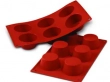 Cake and pastry moulds : For cooking all your cakes. Available in various shapes and sizes for tarts, cakes, madeleines, financiers, etc.
 -
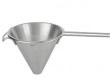 Chinois : A chinois is a solid conical strainer. It's mainly used for extracting liquid from a mixture by pressing down hard onto it.
 -
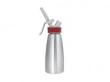 Cream whipper : The Gourmet Whip was initially intended for making whipped cream (like chantilly) by injecting a neutral gas. But now it is used for many other foams, in different flavours, savoury or sweet, cold or ...
 -
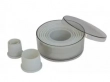 Cutter : This is a ring (or other shape) with a sharp edge, which when pressed down cuts out shapes from pastry, doughs or other soft materials.
 -
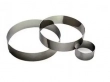 Dessert ring : Like tart rings, but taller (generally 4 cm ou 1.6 inches), dessert rings are used to keep preparations, usually cold, in shape during the assembly of a layered dish.
 -
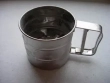 Dredger or shaker : For whenever you need to flour your work surface or sprinkle flour onto dough, pastry, etc.It also allows you to add a little flour to a recipe, without having to use a sieve.
 -
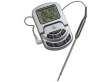 Electronic thermometer : When cooking it is frequently necessary to know the temperature of a preparation. Sometimes it's indispensable, like for recipes using cooked sugar or foie gras.
 -
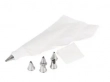 Forcing bag : For filling small moulds, making small fancy items, shaping small cakes.
 -
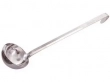 Ladle : A ladle is like a large round spoon with a long handle, used particularly for taking liquids out of containers.
 -
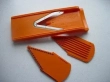 Mandolin : A mandolin is used to cut ingredients (fruit, vegetables, etc.) into very even slices or small sticks. It consists of flat bed with an adjustable blade (plus a range of additional different plates or ...
 -
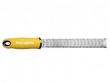 Microplane grater : The microplane grater (microplane is a brand name) is a very fine grater made of stainless steel, very strong, with very small holes, which allows you to grate or zest all kinds of food in a very fine...
 -
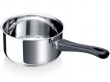 Pan : The basic utensil in cooking, for everything that needs to be cooked, boiled, heated, etc.
 -
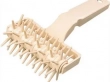 Pique-vite (pastry pricker) : For pricking over the base of a tart, or sheet of puff pastry, to prevent bubbles during cooking. This is usually done with a fork, but this small roller does the same thing very fast and evenly. It's...
 -
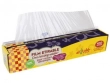 Plastic film and cooking papers : See the page dedicated to plastic film and papers used in cooking.
 -
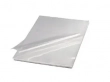 Plastic sheet : Bread dough needs to be covered during resting and rising, and a damp tea-towel works well. (It needs to be damp so that it does not take moisture from the dough). Another good solution is to use a p...
 -
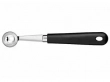 Pommes parisiennes spoon : This is a metal scoop, half spherical in shape, used to cut small even balls of fruit or vegetables. Sometimes sold as a melon ball spoon.
 -
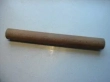 Rolling pin : A rolling pin is a rigid cylinder which is used for rolling out all kinds of dough.
 -
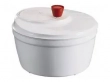 Salad spinner : A salad spinner is a simple device: a kind of mesh basket which is spun by turning a handle on the lid. As the basket turns very fast, any items in it are forced agaisnt the sides by centrifugal force...
 -
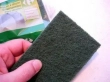 Scouring pad : This sponge with one abrasive face is normally use to clean pans, but it's also very useful for scrubbing fruit or vegetables that are not going to be peeled like courgettes or potatoes.
 -
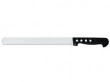 Serrated knife : Unlike a classic knife, which is ground to produce a fine cutting edge to the blade, a serrated knife has teeth like a saw. This kind of knife doesn't need sharpening, and cuts certain foods, bread a...
 -
 Short-handled brush : This is a small hand brush with very fine bristles, used for gently brushing the dough during bread making, to remove excess flour. Very useful, indispensable even, for bread recipes where the soft do...
 -
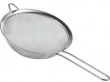 Sieve : A sieve is a fine strainer, which can be used to filter a preparation thoroughly (a blackcurrant coulis for example), but also for solids to make them smoother (potato purée for example).
 -
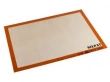 Silcon baking mat : Sometimes using a nonstick baking sheet is not enough when cooking items that stick well, such as macarons or coconut tuiles for example. In this case it's possible to line the sheet with cooking par...
 -
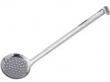 Skimmer : Used for removing the froth that forms on top of some liquids during cooking like soups, stock, jams, etc. Sometimes it's used for removing something from liquid, like vegetables in water for example...
 -
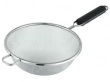 Strainer : Circular in shape and available in different gauges (size of holes). Very useful for straining something liquid or sieving a powder, like for example a raspberries coulis to extract all the seeds, or ...
 -
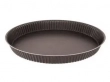 Tart rings, moulds or tins : For cooking tarts and tartlets, you can use classic moulds or tins (left photo), or rings (right photo) which are moulds with no base that are placed on a non-stick baking sheet for cooking. This is w...
 -
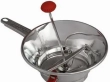 Vegetable mill : Vegetable mills have been around for a long time, and are fairly simple: a revolving plate forces the vegetables (or fruits) through a grill plate (the size of holes varies). Of course it takes a bi...
 -
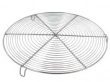 Wire rack : Mainly used for leaving items to cool (cakes, tarts, etc.), so that air can circulate around them, particularly underneath. Generally metal utensils, rectangular or round as in the photo.
Thanks so much, I love and encourage your effort
:) !
#(RTBF) RoadToBeFamous
#imSoThankful
dipika
❤❤
lolol
:)
tnx..
finally..
my prob is solve..
its very useful in a student like me:)
Thank you so much