Overview
There are now many different papers and plastic films available which are valuable aids, sometimes indispensable in the kitchen. Here is an overview of key products, and what can or can not be done with them.Plastic film
| This is a very thin plastic that can be stretched over a container, commonly used to protect food from the air. It is found in supermarkets in rolls of about twenty meters or 60 feet as "plastic food wrap" or "cling film", or much longer rolls in shops for professionals. I think it's essential in the kitchen. This film is resistant to cold in the freezer or fridge, but it can not be heated without melting. Impossible therefore to use it in the oven or microwave. | 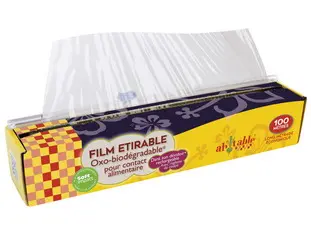 |
Cooking film
| This is almost the same as the previous one, identical in appearance and a little more expensive, but can be heated up to 175°C (347 F). It is also found under the name of "plastic cooking wrap" or "microwave film". Check that the label states the temperature you are planning to use. It can be used in the oven or microwave. Note: If you drop a roll of plastic wrap on its end, it will be virtually useless because it's almost impossible to tear off regular sheets afterwards. | 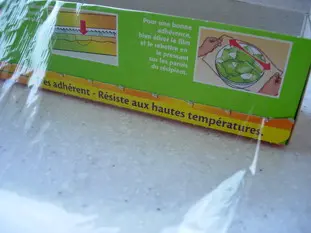 |
Oven cooking bags
| These bags look like plastic freezer bags, but are in fact a kind of nylon, resistant to high temperatures up to 220°C (428 °F). Originally from UK, they allow quite extraordinary cooking without added fat, as in the 5 hours poultry recipe. Also sold as "cooking bags", "oven bags" or "roasting bags". They can be used in the oven or microwave. | 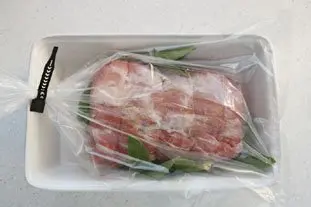 |
Wax paper (US) or greaseproof paper (UK)
| A little outdated now, this is a slightly stiff translucent white paper, resistant to heat, formerly much used to line tins or to protect pastry during baking. Quoted in older books and recipes, it was necessary to wet the back of the paper to remove what was cooked on it (eg macaroons). It has now largly been replaced by cooking parchment (see below). | 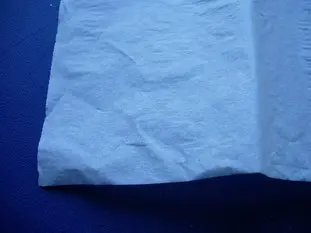 |
Cooking parchment
| Cooking parchment (or baking paper) is a greyish slightly stiff translucent paper, resistant to heat, ideal for baking because whatever is cooked on it comes away easily from its very slippery surface. It can be found in supermarkets in rolls of about twenty meters or sixty feet, or in shops for professionals, in packs of different sized sheets as "silicone paper". I think it's essential in the kitchen. Warning: cooking parchment paper has two sides that you can tell apart by rubbing with your finger. One side is slippery and it's on this side that items to be cooked should be put. It can be used in the oven or microwave. | 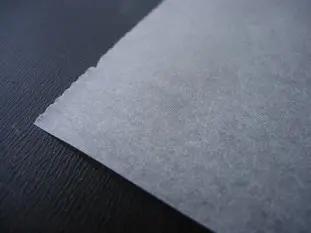 |
Aluminium foil
| Aluminium foil is a thin sheet of aluminum, generally used to wrap foods for protection or during cooking. It can be found in supermarkets in rolls of about thirty meters under the name "aluminum foil", "cooking foil", or much longer rolls in shops for professionals. Warning: foil has two sides that look different, one side is shiny, the other dull. Food should be placed against the dull side. It can be used in the oven, or barbecue, never in the microwave. Note: If you drop a roll of foil on its end, it will be virtually useless because it's almost impossible to tear off regular sheets afterwards. | 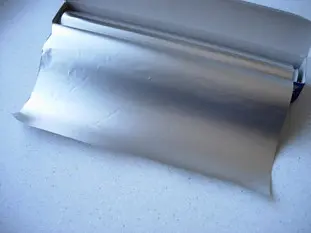 |
Absorbant kitchen paper
| Kitchen paper, or kitchen roll, (frequently called "Sopalin", a trade name, in France) is a roll of thick embossed paper intended for absorbing liquids. It is used for drying items placed on it after draining, also to wipe almost everything. It can be found in supermarkets in rolls about twenty centimeters wide. | 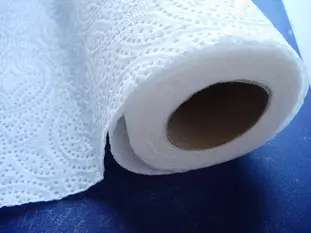 |
Dispensers
| Having several of these papers or film in use requires storing all the different rolls in a closet or a drawer, which is not always practical. I suggest you use a wall-mounted dispenser, which allows you to tear a sheet quickly from three (or more) different rolls. | 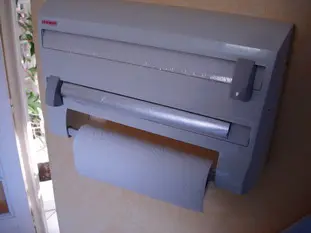 |
Save money
| As I said, you can buy rolls of about 10 meters in supermarkets, but there is something more smart to do: you can, in shops for professional, buy rolls of 300 meters for a very good price.
Don't be afraid by the length, 300 meters seems huge, but you will keep it for years, and most of all it's 10 times less expensive for a best quality!. | 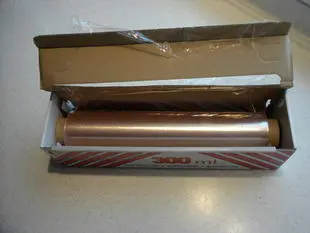 |
| It's quite the same thing for cooking parchment, you can find it in box of 500 sheets.
This it's 8 times less expensive, and the sheets are flats (instead of roll) when use, and be reused several times. | 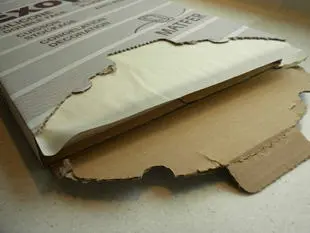 |


I had buy cooking bag at Tesco, it was a very reasonable price, and you have huge ones for turkey or big poultry that we haven't in France, lucky you are!
Sorry, no idea for cling film, except maybe to look in yellow pages for shops for chefs?
Guys, you have really strange questions...