Products and ingredients
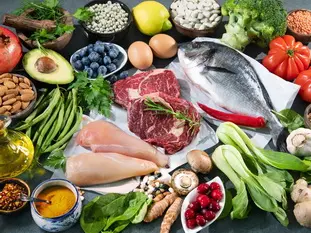
On this page you will find information about some products and ingredients used in the recipes on this website.
989K 19
Last modified on: September 18th 2022
Products and ingredients
-
 Agar-agar : Agar-agar is a natural gelling agent, of vegetable origin, made from seaweed. It is sold as a beige powder, and has no taste or smell.
 -
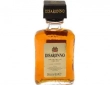 Amaretto : Amaretto is an Italian sweet almond-flavoured liqueur. It is made from a base of almonds or apricot stones
 -
 Apricot glaze : Apricot glaze is an apricot jelly (strained jam), used to coat tarts, to protect them from the air and give them a glossy appearance.
 -
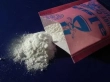 Baking powder : Baking powder (also called "Alsatian yeast" or "chemical yeast" in France) is a chemical raising agent, mainly bicarbonate of soda (or sodium bicarbonate), which acts with heat to make cakes rise.It i...
 -
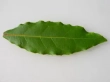 Bayleaf : See more...
 -
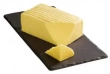 Butter : Butter is a fat obtained from dairy cream by the mechanical process known as "churning" (traditionally done from ancient times in a receptacle called a churn, in which the cream is agitated until it t...
 -
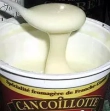 Cancoillotte : Cancoillotte is a runny French cheese made from milk cow, principally in Franche-Comté traditional province of eastern France.
 -
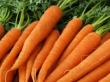 Carrot : Carrot is a tuber that is a vegetable that grows underground.
 -
 Caster sugar : Basic white sugar is mainly extracted from sugar beet or sugar cane. This is then refined and crushed to produce the familiar small crystals or powder.
 -
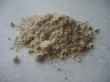 Chestnut flour : Made from dried chestnuts, this is a light brown flour without gluten. Not suitable for making bread (unless mixed with a proportion of wheat flour), but it's excellent for cakes, biscuits, pancakes,....
 -
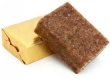 Chicken or beef stock cube : It's beef or chicken stock, concentrated and dehydrated (all water is removed).
It's very useful to increase the taste of sauces, soups and others.
Chicken or beef stock cube : It's beef or chicken stock, concentrated and dehydrated (all water is removed).
It's very useful to increase the taste of sauces, soups and others.
-
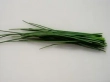 Chives : See more...
 -
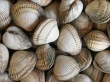 Cockles : Cockles are a small shell of the North Atlantic, living under 1 or 2 cm of sand. His flesh inside is a small white nut with a little orange spike, and a delicate iodized.
 -
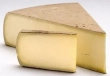 Comté cheese : Comté is a cow's milk cheese, made in the Jura's mountains, in eastern France. It looks a bit like Gruyère and Emmenthal (without holes), but that's just the appearence, its flavour is much stronger...
 -
 Cornflour : Cornflour is a starchy flour made from maize. It is mostly used as a thickening agent: when mixed with a liquid and heated, it thickens rapidly without altering the flavour.
 -
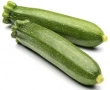 Courgette : Courgette (Zuchini) is a summer vegetable, full of fibre and vitamins.
 -
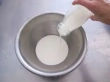 Cream : If you leave milk to stand (real milk that is, full-fat, coming straight from the cow), after a while small droplets of fat float to the top, they come together and create the fat part of the milk: cr...
 -
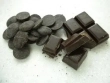 Dark chocolate : Chocolate use in pastry is usually sold in bars that sould be break into small pieces and then melted in a bain-marie. You can also find chocolate in "pistoles" (small round pieces, at left on the ph...
 -
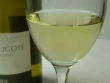 Dry white wine : There are dozens of dry white wines, and you can usually use the one you choose (except for recipe with particular white wine).
 -
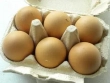 Egg : Eggs (we no longer specify that they are hens' eggs these days) are used widely in cooking and patisserie. They may be one of the ingredients (in a dough, sauce or dressing, for example), or the main ...
 -
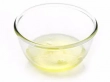 Egg white : Egg white is the common name for the clear liquid contained within an egg which fold and protect yolk. An egg white is about 30 grams.
 -
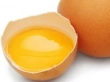 Egg yolk : One egg yolk is about 25 grams.
 -
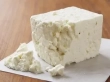 Feta : Feta is a brined curd cheese traditionally made in Greece, from sheep milk (sometimes from goat milk).
 -
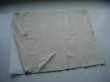 Filo pastry : Filo pastry (or phyllo - fillo) is a flour-based product from Greece or Turkey. The very thin sheets are often used to wrap fillings and produce a very crisp roll or parcel.Filo pastry is used for som...
 -
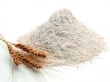 Flour : See more...
 -
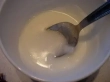 Fondant icing : Fondant icing is a mixture of sugars and water, in the form of a white paste, fairly hard when cold, but which softens when warmed. It's used for icing the tops of cakes and pastries such as millefeui...
 -
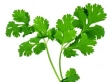 Fresh coriander (cilantro) : See more...
 -
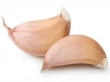 Garlic clove : Garlic is a plant that is harvested in "heads", which are then separated into cloves. Its taste makes it a powerful condiment often used in cooking.
 -
 Gelatin : Gelatin is a gelling agent, of animal origin, which is used in cooking to thicken or set preparations. It dissolves when heated (at about 60°C), and then acts as a gelling agent when the temperature ...
 -
 Grand Marnier : Grand Marnier is an orange-flavored brandy liqueur made from a blend of Cognac brandy, distilled essence of bitter orange, and sugar. Grand Marnier is 40% alcohol (70 Proof in UK, 80 Proof in US).
 -
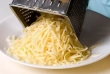 Grated cheese :
 -
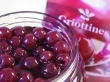 Griottine cherries : The griottines cherries are small red cherries, pitted and kept in a Kirsch syrup.
 -
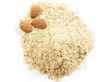 Ground almonds : Grounded almonds, or sometimes flour almonds, are almonds very finely milled.
 -
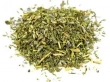 Herbes de Provence : The "Herbes de Provence" (Provençal herbs) preparation, as used in France, is a mix of dried herbs, crumbled fairly small. This mix is used for the typically "Mediterranean" flavour it brings. It is...
 -
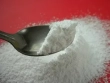 Icing sugar : Icing sugar is a very fine powder, it's caster sugar which is just ground very finely.
It is widely used in baking and pastry to dust.
Icing sugar : Icing sugar is a very fine powder, it's caster sugar which is just ground very finely.
It is widely used in baking and pastry to dust. -
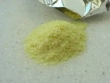 Instant mashed-potato powder : Instant mashed-potato powder is made of cooked potatoes which have been dried, then powdered.
Though intended as a quick way of making mashed potato, it can be used as an ingredient in recipes.
Instant mashed-potato powder : Instant mashed-potato powder is made of cooked potatoes which have been dried, then powdered.
Though intended as a quick way of making mashed potato, it can be used as an ingredient in recipes. -
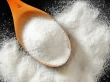 Jam gelling agent : Commercial jam jellies are mainly composed of fruit pectin (usually apples), and sold as a neutral-coloured powder.
 -
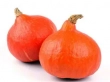 Japanese chestnut pumpkin (Potimarron) : The potimarron is a kind of pumpkin which originated in Asia. It's shaped like a very large pear, with a hard reddish-orange skin.It is different from the classic pumpkin, especially in 2 respects: th...
 -
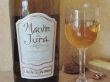 Jura Macvin : Macvin du Jura is a liqueur made by blending vineyard grape juice (fermented or not) with Marc du Jura eau-de-vie. The resulting mixture is left to mature for at least a year in barrels before bottlin...
 -
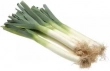 Leek :
 -
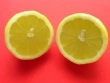 Lemon : Lemons are citrus fruit. The skin of the lemon is normally yellow, unlike the smaller, green-skinned lime. The whole flesh of the lemon is sometimes used, but recipes often call for the juice and/or...
 -
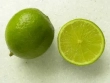 Lime : Lime is a citrus, a cousin of lemon, but not a kind of lemon.
It's a very tasty fruit, frequently use in cooking and pastry.
Lime : Lime is a citrus, a cousin of lemon, but not a kind of lemon.
It's a very tasty fruit, frequently use in cooking and pastry. -
 Malibu rum : Malibu Rum is a liquor made from rum and coconut extract. The alcohol content by volume is 21% (42 proof).
 -
 Milk : When we talk of milk on cooking-ez.com, and unless otherwise specified, it's cow's milk. It should also always remember to explain to childrens in towns, that milk comes from cows, not bricks or bott...
 -
 Mint : See more...
 -
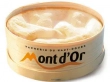 Mont-d'Or cheese : Mont-d'Or is a cheese made from whole raw cow's milk in Franche-Comté (an area of eastern France).It's a soft and full-flavoured cheese, sold in a characteristic wood box.Mont-d'Or in Wikipedia.
 -
 Morteau sausage : Morteau sausage is a delicious sausage, smoked for at least 48 hours with conifer sawdust in the highlands of the French region of Franche-Comté. Unfortunately it does not yet benefit from A.O.C. sta...
 -
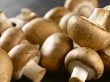 Mushrooms :
 -
 Noilly : Noilly Prat is a vermouth, a wine with the addition of alcohol and various herbs, invented in 1813 in Marseillan in France. Noilly tastes something like a sweet white wine, but with complex flavours ...
 -
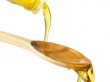 Oil : By "oil" I mean "any kind of oil", but usually it's neutral oil like ground oil or sunflower.
It's opposite to olive oil, or sesame oil, which are much more tasty.
Oil : By "oil" I mean "any kind of oil", but usually it's neutral oil like ground oil or sunflower.
It's opposite to olive oil, or sesame oil, which are much more tasty. -
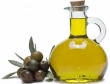 Olive oil : Olive oil is a fat obtained by the cold pressing of olives (the fruit of the olive tree). Rather like wine, olive oil comes from a vast array of origins and cultivation methods. In the bottle, this of...
 -
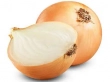 Onion : Onions are condiment plants, closely related to shallots, but larger and with a more robust flavour.
 -
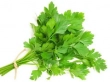 Parsley : See more...
 -
 Pearl sugar : Coarse sugar crystals are usually white and have much larger grains than caster or granulated sugar.They are used for decorating cakes and pastries, such as chouquettes, for example.
 -
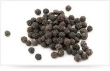 Pepper : Pepper is a spice obtained from the berries of two kinds of tree. The berries (peppercorns once dried), yield three kinds of pepper, depending of harvest period and processing:Green pepper (immature b...
 -
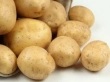 Potatoes : Potato is a tuber, that mean a vegetable that grows in the ground.
 -
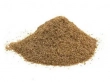 Quatre-épices (four spices) : Quatre-épices (4 spices) is a mix of: black pepper, cloves, nutmeg and cinnamon.Sometimes a fifth spice is added, ginger or chilli.
[Translator's note: this mix is rather hotter and less sweet than ...
Quatre-épices (four spices) : Quatre-épices (4 spices) is a mix of: black pepper, cloves, nutmeg and cinnamon.Sometimes a fifth spice is added, ginger or chilli.
[Translator's note: this mix is rather hotter and less sweet than ... -
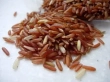 Red rice : Red rice is a whole-grain rice with a strong and delicious flavour. Originally from Asia, it's now produced in several places in the world.
 -
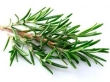 Rosemary : See more...
 -
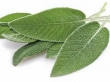 Sage : See more...
 -
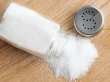 Salt : Salt is more than just a condiment, it plays an important role in bringing out flavours in recipes.There are two main types of salt:Sea salt: made by evaporation of sea waterRock salt: extracted from ...
 -
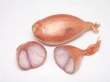 Shallot : Shallots are condiment plants, closely related to onions, but smaller and with a more subtle flavour.
 -
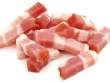 Small pieces of bacon : "Lardons" in French are bacon cut in small pieces, more or less big.
 -
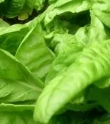 Sorrel : See more...
 -
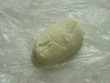 Soured dough : See more...
 -
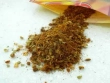 Spices for couscous : For several oriental recipes like couscous or chorba, one use a special mix of spices that can be find in supermarket or ethnic groceries. If you can't find a ready-made mix of couscous spices, you c...
 -
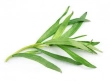 Tarragon : See more...
 -
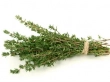 Thyme : See more...
 -
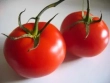 Tomato : Coming from south America, tomato is a fruit rather than a vegetable, even if it's mainly cooked salted.
 -
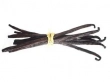 Vanilla : Vanilla is a spice produced by a kind of orchid, originally from South America. After harvesting and treatment it is sold in the form of black pods about 4 inches long.Vanilla can be found in differen...
 -
 Verbena : See more...
 -
 Vitamin C : Vitamin C is an antioxidant, which means that it prevents vegetables and fruits from browning, like a peeled pear for example.Vitamine C is in several fruits and vegetables like blackcurrant and lemon...
 -
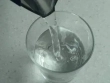 Water : What could be simpler than water? It is true that for most recipes that require it, ordinary tap water is fine. The exception is for sorbets, which can sometimes be affected by the slight chlorine ta...
 -
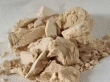 Yeast : Yeast (also called "brewer's yeast" or "baker's yeast") is a living product, made up of microscopic fungi which grow slowly when they are in a warm place.Baker's yeast is for use in breads and viennoi...
By "mash powder" do you mean mash potato powder?
If so, yes you can, see how to on this chicken recipe : chicken breasts in a potato crust.
Can I use potentiometer mash powder to make cutlets?
emmakumar@gmail.com