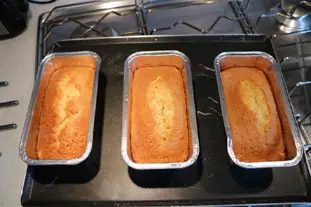
Baking cakes
When you are making a cake, which most likely contains butter (sweet of course...), a pound cake or a moist chocolate cake for example, chances are that as soon as the dough is done, you put it in the pan and bake it immediately.
It's classic, everyone does it that way, and then if, on top of that, you have a few kids around you who are getting impatient, and almost want it to be cooked before going in the oven, when they haven't eaten half of the raw dough before, the pressure is even stronger!
So putting it in the oven right after you've finished kneading your dough is quite classic, but it's actually not a very good thing, for two reasons:
You'll have understood, there's no need to rush: Knead your dough, put the bowl or the mixer bowl in the fridge for 30 minutes (it's often the occasion to do a little washing up...) then only then put it in the oven.
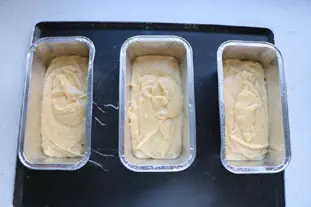
Another option, once the dough is kneaded, put it in a mould, then put the mould in the fridge for 30 minutes. Bake then and only then.
To sum up: Before putting a cake batter in the oven, it is always best to leave it in the fridge for about 30 minutes, as your cake will rise better when baked. In baking, the cold is (almost always) your friend.
It's classic, everyone does it that way, and then if, on top of that, you have a few kids around you who are getting impatient, and almost want it to be cooked before going in the oven, when they haven't eaten half of the raw dough before, the pressure is even stronger!
So putting it in the oven right after you've finished kneading your dough is quite classic, but it's actually not a very good thing, for two reasons:
- The butter is often very soft, especially if the kneading was a bit long and heated the dough, which becomes very soft, and if there are additions in it (grapes for example) they will go down the pan more easily. How to correct this? Put the dough in the fridge for at least 30 minutes.
- The gluten contained in the flour (if there is any in your recipe) under the effect of kneading has begun to structure and "stretch" the dough making it elastic, which is not interesting for a cake because it hinders the rise during cooking. How to correct this? Let the dough rest for at least 20-30 minutes.
You'll have understood, there's no need to rush: Knead your dough, put the bowl or the mixer bowl in the fridge for 30 minutes (it's often the occasion to do a little washing up...) then only then put it in the oven.
Another option, once the dough is kneaded, put it in a mould, then put the mould in the fridge for 30 minutes. Bake then and only then.
To sum up: Before putting a cake batter in the oven, it is always best to leave it in the fridge for about 30 minutes, as your cake will rise better when baked. In baking, the cold is (almost always) your friend.
Lasts posts

Cut twice as fast
When you need to cut something long into small pieces, for example chopped chives or the stem of a spring onion, there's a simple gesture that doubles your cutting speed. Let's see how.May 21th 20261,020

The other use for bowl scraper
Your kitchen or bakery utensils may include a horn (left) or a pastry cutter (right). These practical utensils are normally used to scoop the contents of a bowl or salad bowl - the horn - or to cut dough - the pastry cutter. But they also have another, very practical use - let's see what it is.May 9th 20261,307

The strange foam of potatoes in milk
As you may have already noticed, when you cook potatoes in milk, especially in small pieces (slices or cubes) for a gratin for example, a surprisingly abundant white foam forms on the surface. Where does it come from?April 26th 20261,541

A little leftover butter
Very often when you're making a cake, your recipe will tell you to melt some butter and mix it into the batter - a classic for cookies, cakes, moelleux and the like. And every time you do this, you'll have to butter the baking tin to prevent the dough from sticking during baking. Naturally,...April 16th 20261,4065

A tablet holder
Perhaps you too cook by consulting your recipe on a tablet or phone, and putting it down on your worktop? It's practical, but not the best solution. Here's a look at how you can make an inexpensive, almost universal stand.March 14th 20262,1215
Other pages you may also like
Cut twice as fast
When you need to cut something long into small pieces, for example chopped chives or the stem of a spring onion, there's a simple gesture that doubles your cutting speed. Let's see how.May 21th 20261,020

The art of the charlotte
In cooking, a charlotte is a delicious moulded dessert, with biscuits around the outside that have been soaked in a flavoured syrup, filled with a light cream or mousse. The charlotte is left to set in the fridge before being turned out and served in slices. It is very light and a lovely sweet...February 27th 201348 K4.3

Egg yolks and caster sugar
We often come across recipes where we need to mix egg yolks with caster sugar. This would appear to be a very ordinary and simple thing to do but, be warned, these two ingredients can behave oddly together.February 15th 201886 K 24.3

The so-called "nervous" meats
You've probably heard this before, we're talking about "nervous" meat, or meat with nerves, to describe what is indicated by the blue arrow on the left. This is a piece of beef, and what we call a nerve is not a nerve, it is in fact collagen (chemists sometimes call it a "collagen sink"), a...April 16th 202140 K4.5

No need to boil gelatin
Gelatin is a magical ingredient for making light, creamy, structured desserts, yet it's often misused in the kitchen. A common mistake in some recipes is the idea that it needs to be boiled for it to work properly, but this is a mistake indeed: gelatin melts at a much lower temperature, around...November 21th 202410 K5
Post a comment or question
Follow this page
Receive an e-mail as soon as this page is modified or receives a new comment.
We'll never share your e-mail address with anyone else.
Alternatively: you can subscribe to the mailing list of cooling-ez.com , you will receive a e-mail for each new recipe published on the site.