Fruits and their syrup


Fruits and their syrup
As I write these lines, we are finally in the summer, the holidays are approaching, and above all, the fruits are pouring onto the market stalls, if they are ripe, it's time to enjoy them to the full!
13 K 4.7/5 (16 reviews)
Grade this page:
Keywords for this post:FruitSummerSyrupSugarCompoteJam
Last modified on: July 24th 2019
For this postComments Lasts posts Follow
For this post: Comment Follow Ask me a question Send to a friend
You may be about to start making compotes, jams, or a bunch of other recipes based on cooked fruits, in which case you will probably find yourself mixing sugar and fruit at some point before cooking.

In this case, for a compote for example, you will probably add a little water to start the cooking. It's indicated in a lot of recipes, and you may be used to doing it that way, no worries, it's very classic. It works of course, but it's not great this addition of water : it will have to go away afterwards (longer cooking time) and it will make your fruits taste a little bit less spicy.

Can we do better?
Yes, much better, you have to play on the "syrup" effect between sugar and fruits. When you mix sugar and fruit together, the sugar, which is hygroscopic, pumps the water from the fruit with which it mixes to form a natural syrup. This syrup, as tasty as your fruit, is much better for the start of your future compote or jam.

How to make it?
Very simple:

1) Prepare your fruits, cut them into small pieces, here rhubarb, put in the cooking pot.
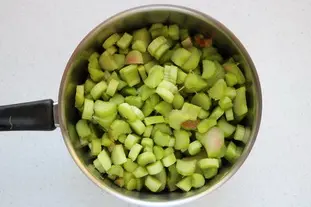
fruits coupés


2) Add the powdered sugar, mix briefly.
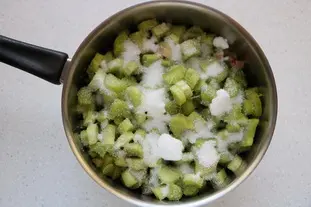
fruits avec sucre


3) Wait, at least 2 hours, overnight if you want, let the sugar work and melt.
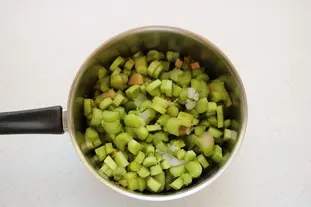
fruits avec sucre fondu


After this time, the syrup has started to form, you can see it by tilting the pan a little. It is pure fruit syrup, quite thick and tasty, the ideal texture to start your cooking which will be 100% fruit + sugar.
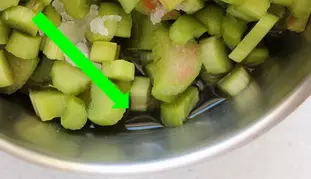
fruits avec leur sirop


You can proceed like this with all fruits, for small ones and berries (cherries, blackcurrants, blackberries, raspberries, ...) no need to cut them but you will have to wait a little longer to see the syrup form.


To sum up: When cooking fruit, do not add water, just let the fruit syrup have time to form.
Lasts posts
Serving Temperature for Wine
When it comes to serving wine, you may (like me) have a fairly simple rule of thumb: red wine at room temperature, and white, rosé, and yellow wines in the fridge until it’s time to serve them. It’s very easy to remember, but it’s a bit simplistic, and you’ll see that there’s a much...
September 23th 20268145
Hot Emulsified Sauces
In French cuisine, sauces are a very important part of a recipe—not just a side dish. In fact, they’re so important that, especially since the time of Auguste Escoffier, they’ve been classified into categories. And among these categories are “hot emulsified sauces,” or lukewarm ones. ...
September 9th 20261,2335
Hot Dishes and Cold Dishes
When plating or serving a dish—whether hot or cold—on a plate, it’s very important to make sure they’re both the right temperature; in other words: if the dish is hot, the plate should be hot, and conversely, if the dish is cold, the plate should be cold. Is this really important? Let’s...
September 2nd 20269713
In baking, cold is your friend
When you bake at home—especially when making pie crusts—you’ve probably noticed that it’s quite difficult to work with the dough when it’s hot. It gets soft, is hard to roll out, and breaks or crumples very easily. And this doesn’t just happen when it’s hot—even in a comfortable...
August 26th 20269995
With vinegar?
When you buy a jar of pickles labeled “in vinegar,” you’re looking for their tangy, crunchy flavor to go with cold cuts, sandwiches, or salads. You expect to find small gherkins preserved in vinegar, with salt and herbs, but is that really the case?
July 15th 20261,9544.8
Other articles you might also like
The return of the "Norman hole"
You maybe know the "trou normand", this old gastronomic custom typically French which consists in taking a (small) glass of calvados, generally between the last course and the dessert? It's something that seems a bit anachronistic nowadays, having a glass of an alcohol of more than 60° in the...
December 18th 202117 K4.8
How to sprinkle well?
When in a recipe you need to sprinkle something, that is to say to spread a fine layer of powder (flour, sugar, etc.) on something, powdered sugar on a pie for example, you will probably use a fine strainer or a sieve, this is the best way to proceed. But is that all?
May 23th 202312 K4.7
Oven height
When we put a dish or cake in the oven, we naturally tend to put it on the middle shelf, and that's what we usually do. But in some cases, this position and height can be a little tricky, so let's find out why.
October 8th 20259,7335
The ideal restaurant
Like all passionate cooks (I suppose), from time to time I dream of opening my own restaurant. I imagine loads of things: it will be like this or like that, we'll do this, I'll cook that, the room will have this or that – in short, I dream.
October 15th 201217 K4.4
Preservative oil, an asset for taste
When you prepare a dish using an ingredient that has been preserved in fat, for example a springtime mixed salad with tuna in oil or sun-dried tomatoes, you're probably going to make a french dressing (vinaigrette) next. In that case, why not use the preserved oil from the tuna or tomatoes?
June 5th 20249,1035
Post a comment or question
Posted by
I am not a leaving thing
Follow this page

Receive an e-mail as soon as this page is modified or receives a new comment.

I am not a leaving thing
We'll never share your e-mail address with anyone else.
Alternatively: you can subscribe to the mailing list of cooling-ez.com , you will receive a e-mail for each new recipe published on the site.

Back to top of page