This site uses only a few technical cookies necessary for its operation. By continuing to browse, you accept their use.
To find out more...
To find out more...
Egg whites management
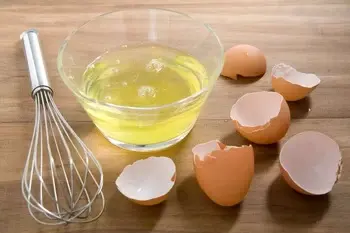
Quite often, in cooking or pastry-making, we have recipes that use only egg yolks: gâteau breton (brittany butter cake), confectioner's custard, spaghetti carbonara, etc. And so, inevitably, we end up with unused egg whites that will have to be used elsewhere, in another recipe, and certainly later, for meringues, macaroons, Pavlova, etc.
And so, inevitably, we end up with unused egg whites that we will have to use elsewhere, in another recipe, and most certainly later, for perhaps meringues, macarons, a pavlova, a frozen nougat, and many others.
And so, inevitably, we end up with unused egg whites that we will have to use elsewhere, in another recipe, and most certainly later, for perhaps meringues, macarons, a pavlova, a frozen nougat, and many others.
12 K 4.9/5 (14 reviews)
Keywords for this post:Egg whiteUseConservationUsageLast modified on: June 12th 2021
Egg whites management
Is this a problem?
No, not so much, because egg whites keep for a long time, you can very well put them in a bowl or a container, which you film and keep in the fridge.
As egg whites are only water and proteins, they keep very well, they don't go mouldy and they keep all their qualities (well, they have almost no taste anyway).
Better still, for certain recipes such as macaroons, you will succeed more easily if you use "old" whites, the pastry chefs say "dry whites", which contain less water than fresh whites.
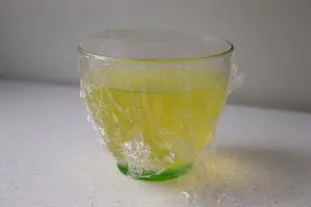
And for longer?
If you are worried about keeping them in the fridge for a long time, you can also freeze them very well.
But it would be a mistake to freeze 6 whites at once for example, you will be forced to defrost all 6 at once as well, which is not very flexible.
That's the trick, you have to freeze them individually by pouring them 1 by 1 into a silicone mould or ice cube tray:
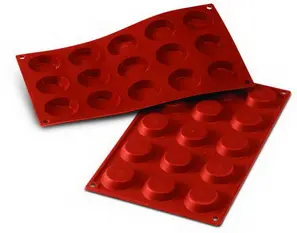
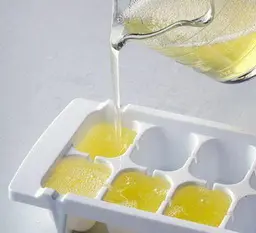
The shape doesn't matter, it just needs to fit a whole white (about 50-60g).
If you have several whites in a bowl, because of their viscous aspect, they will not be easy to pour individually into the moulds.
So to make it easier you can give them a few whacks with a whisk, or even a quick blast with a mixer (2 or 3 seconds), this will make them more liquid and easier to pour/mould.
Then put in the freezer overnight to set, unmould into a freezer bag, and scoop in as you need to.
In summary: Egg whites keep well in the fridge, but they also freeze well, and in this case it's best to freeze each white individually so you can then scoop out just what you need.
Lasts posts

Cut twice as fast
When you need to cut something long into small pieces, for example chopped chives or the stem of a spring onion, there's a simple gesture that doubles your cutting speed. Let's see how.May 21th 20261,288

The other use for bowl scraper
Your kitchen or bakery utensils may include a horn (left) or a pastry cutter (right). These practical utensils are normally used to scoop the contents of a bowl or salad bowl - the horn - or to cut dough - the pastry cutter. But they also have another, very practical use - let's see what it is.May 9th 20261,441

The strange foam of potatoes in milk
As you may have already noticed, when you cook potatoes in milk, especially in small pieces (slices or cubes) for a gratin for example, a surprisingly abundant white foam forms on the surface. Where does it come from?April 26th 20261,709

A little leftover butter
Very often when you're making a cake, your recipe will tell you to melt some butter and mix it into the batter - a classic for cookies, cakes, moelleux and the like. And every time you do this, you'll have to butter the baking tin to prevent the dough from sticking during baking. Naturally,...April 16th 20261,5705

A tablet holder
Perhaps you too cook by consulting your recipe on a tablet or phone, and putting it down on your worktop? It's practical, but not the best solution. Here's a look at how you can make an inexpensive, almost universal stand.March 14th 20262,2335
Other pages you may also like

Double cooking of vegetables
When you cook vegetables, it's not easy to capture and preserve the flavours. It is easy to undercook, but you can make up for it, or overcook, and then it is unfortunately a bit cooked (in the sense of "ruined"). But above all, how to get the maximum of the taste of the vegetable in the pan, then...July 12th 201926 K4.1

The different cooking modes
In cooking, cooking means bringing food into contact with a source of heat, to transform it: improving its taste, and sometimes its texture. This contact with the heat source can be achieved in a number of ways: these are the cooking methods, and let's take a look at the main ones.July 24th 202410 K4.7

The proper use of a dusting machine
Let's take a look at a simple gesture, the sprinkling, that is to say to distribute a fine powder (icing sugar, sugar, flour,...) on a surface. If you have to sprinkle something, you may use a sprinkler or "poudrette" (in french) it is a very simple utensil, a box, with a lid pierced with holes...July 31th 201913 K4.6

Vitamin C against blackening
You've probably heard of this tip: to prevent fruit or vegetables from turning brown or black, simply add or sprinkle lemon juice over them. It's very effective, but why does lemon juice have this effect?July 14th 202311 K 15

Making the most of seeds: Dry roasting
In cooking, and particularly in baking, there are a lot of seeds we can use, such as linseed, sesame, poppy, etc. Usually, recipes simply say to add them just as they are to the mixture or dough. To make a seeded loaf, for example, prepare a plain bread dough as usual, then, towards the end of...January 30th 201565 K4.0
Post a comment or question
Follow this page
Receive an e-mail as soon as this page is modified or receives a new comment.
We'll never share your e-mail address with anyone else.
Alternatively: you can subscribe to the mailing list of cooling-ez.com , you will receive a e-mail for each new recipe published on the site.