The magic of local wines
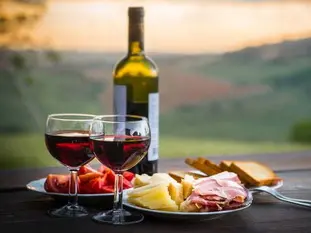
It's never easy to find the right wine to serve with the dish you've just cooked for your guests, because we're not all amateur sommeliers, and then there are so many possible choices in wines that "the perfect match" seems like a distant utopia, almost impossible to obtain. Add to that a lot of preconceived ideas that we have unconsciously in mind, like fish = white wine, and meat or cheese = red wine, which make it very easy to get lost.
12 K 4.7/5 (15 reviews)
Keywords for this post:WineColorAgreementAdviceRegionalLocalLast modified on: April 7th 2020
The magic of local wines
Fortunately, you can ask your wine merchant for advice, which is always a good idea, or you can browse the web, but there you may also find almost everything and its opposite.
It is important to recognize that giving advice on wine is quite arbitrary, of course, matches that please everyone are possible, but there is also a good part of the taste, preferences and personal choices of the person who gives the advice that is found in the suggested wine, which is quite normal.
In short, all this to tell you that there are no established rules, and that the tastes of each person can give very different food-wine associations, and yet very successful.
So there are no rules? So it's true, globally, but there are some "tricks" that work all the time, and it's about one of them that I would like to say a few words.
There is a kind of constant in wine and food pairing, it is the wonderful association that happens almost every time with a regional dish, and the wine of the same region. Let's call it "The magic of local wines"...
I don't know which one influenced the other, but I have to admit that if you taste a regional dish, let's say typical of the area, you can safely opt for a wine from the same area, and be almost 100% sure that the match will be perfect.
I'll take two examples to illustrate my point:
This natural pairing is therefore an interesting option if you are hesitating about your choice of wine, and if your recipe is a little regional, look at the regional wines, you might just find what you are looking for.
Note of course that this agreement is not an obligation, besides there is never an obligation in gastronomy if you like, but just a very interesting option. And anyway, the possibilities are so numerous, and the tastes so different, that each one of us will have his way of seeing things, and thus of realizing his agreement. The ideal of course is that you, or one of your guests, say, after the first glass "Hey, it's not bad at all!
To sum up: Are you going to serve a (slightly) regional recipe? Always think of local wines to serve with it.
It is important to recognize that giving advice on wine is quite arbitrary, of course, matches that please everyone are possible, but there is also a good part of the taste, preferences and personal choices of the person who gives the advice that is found in the suggested wine, which is quite normal.
In short, all this to tell you that there are no established rules, and that the tastes of each person can give very different food-wine associations, and yet very successful.
So there are no rules? So it's true, globally, but there are some "tricks" that work all the time, and it's about one of them that I would like to say a few words.
There is a kind of constant in wine and food pairing, it is the wonderful association that happens almost every time with a regional dish, and the wine of the same region. Let's call it "The magic of local wines"...
I don't know which one influenced the other, but I have to admit that if you taste a regional dish, let's say typical of the area, you can safely opt for a wine from the same area, and be almost 100% sure that the match will be perfect.
I'll take two examples to illustrate my point:
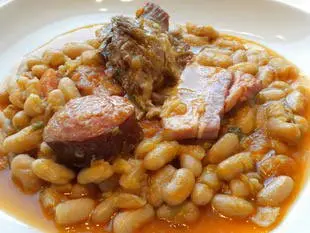
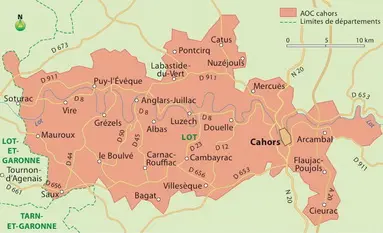
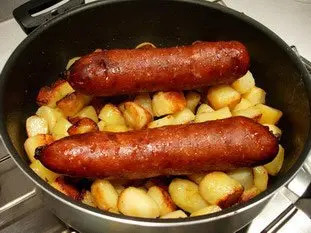
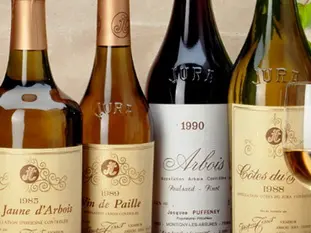
This natural pairing is therefore an interesting option if you are hesitating about your choice of wine, and if your recipe is a little regional, look at the regional wines, you might just find what you are looking for.
Note of course that this agreement is not an obligation, besides there is never an obligation in gastronomy if you like, but just a very interesting option. And anyway, the possibilities are so numerous, and the tastes so different, that each one of us will have his way of seeing things, and thus of realizing his agreement. The ideal of course is that you, or one of your guests, say, after the first glass "Hey, it's not bad at all!
To sum up: Are you going to serve a (slightly) regional recipe? Always think of local wines to serve with it.
Lasts posts

Cut twice as fast
When you need to cut something long into small pieces, for example chopped chives or the stem of a spring onion, there's a simple gesture that doubles your cutting speed. Let's see how.May 21th 20261,377

The other use for bowl scraper
Your kitchen or bakery utensils may include a horn (left) or a pastry cutter (right). These practical utensils are normally used to scoop the contents of a bowl or salad bowl - the horn - or to cut dough - the pastry cutter. But they also have another, very practical use - let's see what it is.May 9th 20261,490

The strange foam of potatoes in milk
As you may have already noticed, when you cook potatoes in milk, especially in small pieces (slices or cubes) for a gratin for example, a surprisingly abundant white foam forms on the surface. Where does it come from?April 26th 20261,741

A little leftover butter
Very often when you're making a cake, your recipe will tell you to melt some butter and mix it into the batter - a classic for cookies, cakes, moelleux and the like. And every time you do this, you'll have to butter the baking tin to prevent the dough from sticking during baking. Naturally,...April 16th 20261,6275

A tablet holder
Perhaps you too cook by consulting your recipe on a tablet or phone, and putting it down on your worktop? It's practical, but not the best solution. Here's a look at how you can make an inexpensive, almost universal stand.March 14th 20262,2715
Other pages you may also like

Well-cooked meat
Have you ever noticed that if you like your meat well done, it invites strange looks? For instance, in a restaurant, when asked “How would you like that cooked?” If you reply, “Well done,” it is almost as if you are swearing….May 21th 201135 K 14.4

The time of the jams
We are well into summer as I write this, and this is the time when most of the fruit is giving or about to give in full. And for many of us, it will also be the time for jams and jellies, one of the best ways to preserve fruit for the next winter.July 12th 202128 K4.5

The painter, the restaurant owners and the opera singer
You might well have noticed that there are recipes involving names that have been so overused (often for any old thing) that they have almost become common nouns.September 25th 201222 K4.4

Clean your mixer easily
If you use a "bowl" or "blender" mixer, as opposed to a plunger, you've probably noticed that it's a bit of a hassle to clean it after use. And yet, with a simple trick, it can be done very quickly. See how here.June 26th 20249,3435

What is the difference between bakery and patisserie?
This is a question that you may well have asked yourself and which I will attempt to answer. In France the two trades of "boulangerie" (bakery) and "pâtisserie" (patisserie and confectionery) have always been quite distinct, but where exactly do the boundaries lie? .February 7th 2017137 K 14.2
Post a comment or question
Follow this page
Receive an e-mail as soon as this page is modified or receives a new comment.
We'll never share your e-mail address with anyone else.
Alternatively: you can subscribe to the mailing list of cooling-ez.com , you will receive a e-mail for each new recipe published on the site.