This site uses only a few technical cookies necessary for its operation. By continuing to browse, you accept their use.
To find out more...
To find out more...
The super powers of cornstarch
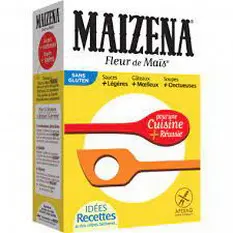
I start this new year by evoking an old product, that you most probably have in your cupboards, a white powder, often in a small cardboard package with a slightly outdated look, only the "gluten free" is relatively recent, it is simply cornstarch, hence its name of maïzena.
It's used for a lot of things, mainly as a thickener in pastry, but it can also, sometimes, work small miracles in the kitchen.
It's used for a lot of things, mainly as a thickener in pastry, but it can also, sometimes, work small miracles in the kitchen.
17 K
Keywords for this post:FlourCornCornstarchThickenerStarchSaucePastryLast modified on: January 14th 2022
The super powers of cornstarch
How does it work?
See what happens when you make a béchamel sauce? It's pretty liquid because of all the added milk, but it heats up slowly while you stir regularly, and suddenly bim! The whole thing thickens and your béchamel is there, thick and creamy.
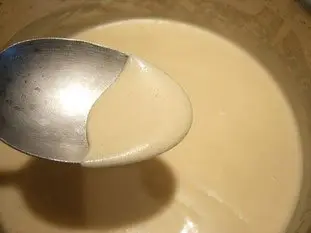
A simple physical thing happened, the grains of starch in the flour, contained in the roux, finally exploded under the effect of the heat, around 60°C, and immediately absorbed a big part of the milk to form a starch, that's the béchamel.
The link with cornstarch is that it can do the same thing, but as it contains only starch (from corn), its binding power is stronger.
Add to that the fact that it doesn't add any taste, and you have a binder that can be used in many recipes, sweet or savoury, and situations of which here are a few.
Soups and veloutés
When you make a soup (a blended soup) of pumpkin for example, there is sometimes a little problem of texture: it settles, vegetable pulp at the bottom of the pan and water on top.
It doesn't change the taste, but it's not a very pretty or pleasant texture, especially if it's been waiting a while.
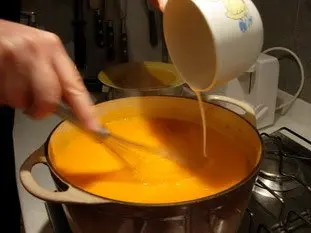
Solution : Mix 2 tablespoons of cold water with 2 tablespoons of cornstarch, and incorporate this mixture with a blender or a whisk at the end of the cooking time, you will be amazed by the creamy effect obtained.
Dishes in sauce
When you make a dish in sauce like beef bourguignon, coq au vin, or blanquette de veau, you often need to add flour and cook for a very long time uncovered to obtain a thick sauce. Sometimes, frustratingly, it doesn't even thicken (well).
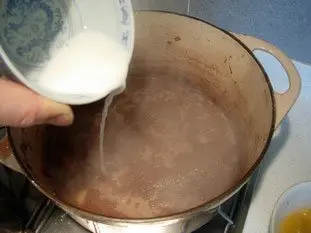
Solution: Same treatment as for the soup, a tablespoon is enough, added by mixing briskly (whisk, spatula), the neutral taste of cornstarch ensures a thick sauce with an unchanged taste.
You want to prepare a sauce with a deglazing (you pour a liquid, wine for example) of the cooking pan, but without using cream?
No problem, deglaze, bring to a boil and whisk in the cornstarch + water mixture, a large teaspoon is enough. Velvety sauce guaranteed.
Catching up with disasters
You have made a custard, for example, and it has dissociated? All is not lost, add 1 teaspoon of cornstarch + water to the mixer.
Replacing the flour
In some preparations, pastries, creams etc. traditionally made with flour, you can very often replace the flour with cornstarch, because flour, in this context of cooking at low temperature, has a tendency to soften the preparation. That's why pastry cream, almond cream, and even some cookies, will be better and easier to make with cornstarch than with flour.
As you can see, cornstarch is your friend, it's always good to have a pack of it in your cupboards, and it can be used in many ways, mainly as a thickener.
The power of cornstarch again: Make this delicious chocolate cornstarch cream with your kids (less than 5 minutes), you'll have a huge success!
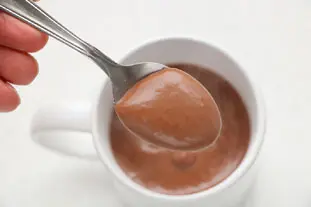
To sum up: Cornstarch is an excellent binder in cooking and baking, it can be used in many recipes, but also to make up for small disasters.
Lasts posts

With vinegar?
When you buy a jar of pickles labeled “in vinegar,” you’re looking for their tangy, crunchy flavor to go with cold cuts, sandwiches, or salads. You expect to find small gherkins preserved in vinegar, with salt and herbs, but is that really the case?July 15th 20265994.8

Congratulate the chef
You've just finished a meal that you really enjoyed. The server approaches with the usual question: “How was it?” And then, as a natural reflex, you simply reply, “Yes, it was very good.” However, when the meal was truly outstanding, this brief exchange deserves a little more. .July 7th 2026711 25

Cut twice as fast
When you need to cut something long into small pieces, for example chopped chives or the stem of a spring onion, there's a simple gesture that doubles your cutting speed. Let's see how.May 21th 20262,0265

The other use for bowl scraper
Your kitchen or bakery utensils may include a horn (left) or a pastry cutter (right). These practical utensils are normally used to scoop the contents of a bowl or salad bowl - the horn - or to cut dough - the pastry cutter. But they also have another, very practical use - let's see what it is.May 9th 20261,8383

The strange foam of potatoes in milk
As you may have already noticed, when you cook potatoes in milk, especially in small pieces (slices or cubes) for a gratin for example, a surprisingly abundant white foam forms on the surface. Where does it come from?April 26th 20262,2275
Other pages you may also like

The right size of zucchini
When you buy zucchini at the market, you're often offered a wide variety of sizes, from very small to very large. But which ones to choose? Here are a few tips.September 9th 202412 K5

Making the most of seeds: Dry roasting
In cooking, and particularly in baking, there are a lot of seeds we can use, such as linseed, sesame, poppy, etc. Usually, recipes simply say to add them just as they are to the mixture or dough. To make a seeded loaf, for example, prepare a plain bread dough as usual, then, towards the end of...January 30th 201565 K4.0

Egg yolks and caster sugar
We often come across recipes where we need to mix egg yolks with caster sugar. This would appear to be a very ordinary and simple thing to do but, be warned, these two ingredients can behave oddly together.February 15th 201886 K 24.3

The beautiful story of the croissants
As you may have already noticed, cooking, baking and pastry-making are full of stories or legends, usually very romantic, about this or that product or recipe. This is often the case for named recipes, for example tarte tatin, peach melba, paris-brest and many others, but it also applies to very...October 10th 201822 K5

The return of the "Norman hole"
You maybe know the "trou normand", this old gastronomic custom typically French which consists in taking a (small) glass of calvados, generally between the last course and the dessert? It's something that seems a bit anachronistic nowadays, having a glass of an alcohol of more than 60° in the...December 18th 202116 K4.8
Post a comment or question
Follow this page
Receive an e-mail as soon as this page is modified or receives a new comment.
We'll never share your e-mail address with anyone else.
Alternatively: you can subscribe to the mailing list of cooling-ez.com , you will receive a e-mail for each new recipe published on the site.