Should potatoes be washed twice?


Should potatoes be washed twice?
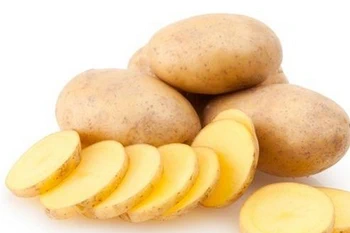
Let's say you have to make a recipe that includes potatoes, let's say sliced, you'll most likely proceed as follows: Peel the potatoes, wash them, slice them, wash them again, pat them dry and add them to your recipe.

But there's a "but": depending on the recipe, the second washing may be a bad idea. Let's see why.
6,898 5/5 (2 reviews)
Grade this page:
Keywords for this post:PotatoesVegetablesStarchWashingPreparation
Last modified on: May 19th 2025
For this post: Comment Follow Ask me a question Send to a friend
Should potatoes be washed twice?
Let's take a closer look:

1) Wash the potatoes, then peel them => nothing to say, this is essential, unless your recipe uses potatoes with the skin, in which case you just need to wash and brush them carefully.
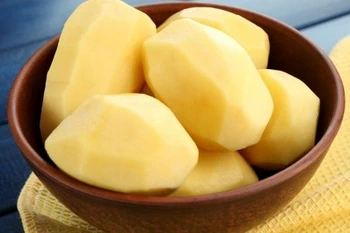
pommes de terre épluchées et lavées


2) Cut the washed potatoes into slices => also classic, but without it being really visible, a discreet white substance appears (after a while) on the cut surface, which is the starch contained in the potato.
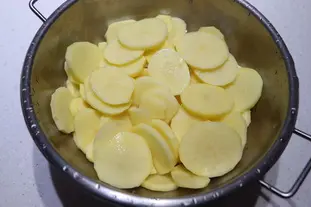
pommes de terre en tranches


Now, this starch, although tasteless, is an excellent natural thickener which can be very useful in the rest of the recipe. Let's imagine you're making a leek-potato soup, for example, using the unwashed potato slices will improve the velvety texture of your future soup, and the same applies to a gratin.

That's why the answer to the question "Should potatoes be washed twice?" is "It depends!" :

- If the potatoes are to be used in a recipe where you're looking for a velvety, creamy, binding texture (soups, "raw" gratins, etc.) => no, they shouldn't be washed a second time, but added freshly cut.
- If the potatoes are to be used in a recipe where crispness or crunchiness is required (chips, fries, etc.) => yes, they should be rewashed to remove the starch.

Note that if you cook or precook the potatoes before use (for a gratin or tartiflette, for example), any starch is eliminated by cooking.

To sum up: Depending on the recipe you choose, wash the potatoes once or twice, i.e. keep or eliminate the starch they produce on the surface.
Lasts posts
Butter vs. grease
Butter vs. grease
We often read in a recipe where a pastry is put into a mould that, just before pouring, the mould should be buttered or greased. But what's the difference between these 2 terms?
December 1st 20252,7635
Getting out of the fridge early
Very often when you're cooking, you need to take food or preparations out of the fridge, to use them in the recipe in progress. There's nothing tricky about this: you just take them out of the fridge and use them, usually immediately, in the recipe. But is this really a good method?
November 24th 20251,7495
Who's making the croissants?
When you look at a bakery from the outside, you naturally think that in the bakery, the bakers make the bread, and in the laboratory, the pastry chefs make the cakes. It's very often like that, with each of these professions having quite different ways of working, but sometimes there's also one...
November 23th 20251,604
Oven height
Oven height
When we put a dish or cake in the oven, we naturally tend to put it on the middle shelf, and that's what we usually do. But in some cases, this position and height can be a little tricky, so let's find out why.
October 8th 20255,5435
The importance of sieving
In recipes that use a fine powder (flour, powdered sugar, etc.), you'll often see the advice to sift before using it. To sift is to pass the powder in question through a sieve (a very fine strainer) before incorporating it into your recipe. It's often advice, but is it really useful?
September 3rd 20259,5703

Other pages you may also like
What is the difference between bakery and patisserie?
This is a question that you may well have asked yourself and which I will attempt to answer. In France the two trades of "boulangerie" (bakery) and "pâtisserie" (patisserie and confectionery) have always been quite distinct, but where exactly do the boundaries lie? .
February 7th 2017135 K 14.1
The beautiful story of the croissants
As you may have already noticed, cooking, baking and pastry-making are full of stories or legends, usually very romantic, about this or that product or recipe. This is often the case for named recipes, for example tarte tatin, peach melba, paris-brest and many others, but it also applies to very...
October 10th 201820 K5
The baker always gild twice
I've already told you about gilding, the beaten whole egg that is spread with a brush on anything that needs to brown in the oven: puff pastry, pastries, etc. and that professionals use a lot, I'm going to come back to this to clarify a bit how to do it, and give you a professional tip.
June 9th 201936 K4.2
Fruits which can ruin your jelly
There are many ways of making a fruit mousse, but one of the simplest is to prepare a fruit jelly (basically a fresh fruit coulis with gelatine) and then mix this jelly before it sets completely with whipped cream. The result is perfect for filling a charlotte, for example. But do beware;...
March 6th 201379 K4.0
Drawing a pattern in pastry
Often in the kitchen, in pastry-making, or in baking, we need to trace a pattern on a pastry. It's just a question of aesthetics but it has its effect after baking on a galette, pithiviers, pâté en croute (terrine in a pie crust), etc.
May 23th 201937 K4.1
Post a comment or question
Posted by:
I am not a leaving thing
The 1 comment already posted on this page
  • Thank you for this advice. I have learnt something new today!
    Posted by David may 23th 2025 at 13:05 n° 1

Follow this page
If you are interested in this page, you can "follow" it, by entering your email address here. You will then receive a notification immediately each time the page is modified or a new comment is added. Please note that you will need to confirm this following.
I am not a leaving thing
Note: We'll never share your e-mail address with anyone else.
Alternatively: you can subscribe to the mailing list of cooling-ez.com , you will receive a e-mail for each new recipe published on the site.

Back to top of page