Always secure your cutting board


Always secure your cutting board
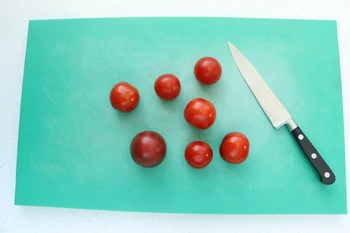
When using a cutting board, it's very important that it's stable and doesn't move while you're cutting, for safety's sake.
Boards have a natural tendency to slide on the work surface, but here are 2 ways to block them effectively.
5,069 5/5 (2 reviews)
Grade this page:
Keywords for this post:CuttingBoardFixingImmobilizationSafetyTipTrick
Last modified on: July 1st 2025
For this post: Comment Follow Ask me a question Send to a friend
Always secure your cutting board

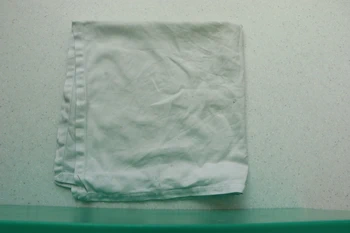
The folded tea towel
blocage planche avec torchon

It's a classic and very simple: just slide a folded cloth under your board to prevent it from slipping.
You can increase the grip by moistening the cloth.

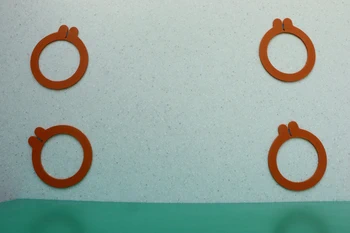
Jar rubbers
blocage planche avec caoutchoucs de bocaux

Even more effective are the 4 jar rubbers, 1 at each corner. Their material is both supple and highly adhesive, ideal for holding your board in place perfectly.
Keep these 4 rubbers in a drawer, close to your work surface, and take them out systematically at the same time as your board.

To sum up: whenever you're cutting or trimming on a board, it's essential to secure the board, for good working conditions. Folded cloth, or even better, jar rubber, are very effective for this.
Lasts posts
Butter vs. grease
Butter vs. grease
We often read in a recipe where a pastry is put into a mould that, just before pouring, the mould should be buttered or greased. But what's the difference between these 2 terms?
December 1st 20258995
Getting out of the fridge early
Very often when you're cooking, you need to take food or preparations out of the fridge, to use them in the recipe in progress. There's nothing tricky about this: you just take them out of the fridge and use them, usually immediately, in the recipe. But is this really a good method?
November 24th 20251,0535
Who's making the croissants?
When you look at a bakery from the outside, you naturally think that in the bakery, the bakers make the bread, and in the laboratory, the pastry chefs make the cakes. It's very often like that, with each of these professions having quite different ways of working, but sometimes there's also one...
November 23th 2025950
Oven height
Oven height
When we put a dish or cake in the oven, we naturally tend to put it on the middle shelf, and that's what we usually do. But in some cases, this position and height can be a little tricky, so let's find out why.
October 8th 20252,6195
The importance of sieving
In recipes that use a fine powder (flour, powdered sugar, etc.), you'll often see the advice to sift before using it. To sift is to pass the powder in question through a sieve (a very fine strainer) before incorporating it into your recipe. It's often advice, but is it really useful?
September 3rd 20257,4553

Other pages you may also like
Cleaning endives
Cleaning endives
If you buy your endives elsewhere than in supermarkets, and in this case the best is of course from a market gardener, he or she is the one who planted and harvested them, in this case you will have endives full of earth or sand, depending on where they were grown, which is normal and reassuring, we...
March 24th 202026 K4.6
The gelling agent in a cream
If you start making a Bavarian cream for example, or any other that contains a gelling agent such as gelatin or agar-agar, you will sooner or later be confronted with the problem: How to properly incorporate this gelling agent into my cream? (and we will focus on gelatin).
June 18th 202214 K4.9
Sugar syrups
Sugar syrups
In cooking, and especially in pastry, we often use sugar syrups, a simple mixture of water and sugar in varying proportions. Here is a presentation of their differences. .
January 17th 202312 K4.8
The 3 secrets of Parisian flan
A flan Parisien, or boulanger, is a simple yet delicious cake. A cream, a mixture of milk, eggs and sugar, is poured into a raw pastry base and baked in the oven until the pastry and cream are cooked. This is the simplest version of the recipe, probably the original one, but nowadays the cream...
July 21th 202316 K4.7
Butter vs. grease
Butter vs. grease
We often read in a recipe where a pastry is put into a mould that, just before pouring, the mould should be buttered or greased. But what's the difference between these 2 terms?
December 1st 20258995
Post a comment or question
Posted by:
I am not a leaving thing

Follow this page
If you are interested in this page, you can "follow" it, by entering your email address here. You will then receive a notification immediately each time the page is modified or a new comment is added. Please note that you will need to confirm this following.
I am not a leaving thing
Note: We'll never share your e-mail address with anyone else.
Alternatively: you can subscribe to the mailing list of cooling-ez.com , you will receive a e-mail for each new recipe published on the site.

Back to top of page