A little leftover butter


A little leftover butter
Very often when you're making a cake, your recipe will tell you to melt some butter and mix it into the batter - a classic for cookies, cakes, moelleux and the like.
And every time you do this, you'll have to butter the baking tin to prevent the dough from sticking during baking.

Naturally, you're going to butter your baking tin with a knob of butter from the fridge, but is this the best way to do it?
2,562 5/5 (2 reviews)
Grade this page:
Keywords for this post:ButterBrushButteringLeftoverMoldCakeRecovery
Last modified on: April 16th 2026
For this postComments Lasts posts Follow
For this post: Comment Follow Ask me a question Send to a friend

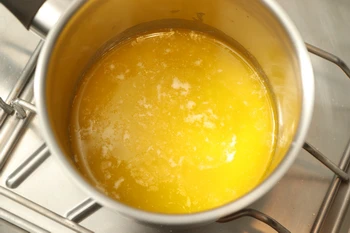
Melted butter in the pan

So you've melted some butter and added it to your dough, as planned.
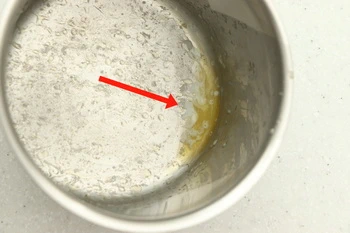


Small amount of butter left at the bottom of the pan

But in the now empty container where you melted the butter (saucepan, bowl or other), there's still a little left, at the bottom and around the edges.

.


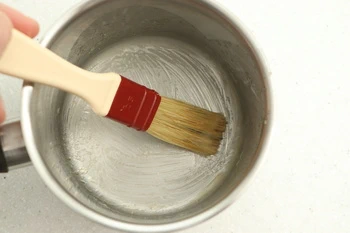
recover the leftover with a brush

The trick is to use this little leftover, to brush it off, at the bottom and around the edges...
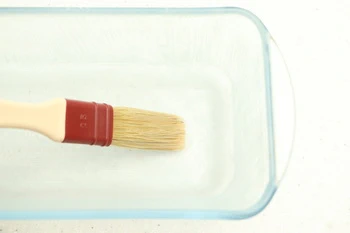


Buttering with a brush

... and simply use it to butter your mold.

That way you don't waste anything, and you've already got melted butter to easily butter your mold.


.

In short: If you've melted butter for your recipe, use the little leftover at the bottom of the pan to easily butter your mold.
Lasts posts
With vinegar?
With vinegar?
When you buy a jar of pickles labeled “in vinegar,” you’re looking for their tangy, crunchy flavor to go with cold cuts, sandwiches, or salads. You expect to find small gherkins preserved in vinegar, with salt and herbs, but is that really the case?
July 15th 20261,4944.8
Congratulate the chef
You've just finished a meal that you really enjoyed. The server approaches with the usual question: “How was it?” And then, as a natural reflex, you simply reply, “Yes, it was very good.” However, when the meal was truly outstanding, this brief exchange deserves a little more. .
July 7th 2026992 25
Cut twice as fast
Cut twice as fast
When you need to cut something long into small pieces, for example chopped chives or the stem of a spring onion, there's a simple gesture that doubles your cutting speed. Let's see how.
May 21th 20262,3775
The other use for bowl scraper
Your kitchen or bakery utensils may include a horn (left) or a pastry cutter (right). These practical utensils are normally used to scoop the contents of a bowl or salad bowl - the horn - or to cut dough - the pastry cutter. But they also have another, very practical use - let's see what it is.
May 9th 20262,1293
The strange foam of potatoes in milk
As you may have already noticed, when you cook potatoes in milk, especially in small pieces (slices or cubes) for a gratin for example, a surprisingly abundant white foam forms on the surface. Where does it come from?
April 26th 20262,4725
Other articles you might also like
A tablet holder
A tablet holder
Perhaps you too cook by consulting your recipe on a tablet or phone, and putting it down on your worktop? It's practical, but not the best solution. Here's a look at how you can make an inexpensive, almost universal stand.
March 14th 20263,0705
Parsley stems
Parsley stems
Parsley, whether curly or flat, is a delicious ingredient in many recipes, where it is used both raw and cooked. When used raw, in a salad for example, where it always provides, alone or with other herbs, a remarkable freshness, only the leaves are kept. And when used cooked?
July 28th 202511 K 13

March 2nd 20268865 Sponsored article
Butter vs. grease
Butter vs. grease
We often read in a recipe where a pastry is put into a mould that, just before pouring, the mould should be buttered or greased. But what's the difference between these 2 terms?
December 1st 20254,6505
The strange foam of potatoes in milk
As you may have already noticed, when you cook potatoes in milk, especially in small pieces (slices or cubes) for a gratin for example, a surprisingly abundant white foam forms on the surface. Where does it come from?
April 26th 20262,4725
Post a comment or question
Posted by
I am not a leaving thing
Follow this page

Receive an e-mail as soon as this page is modified or receives a new comment.

I am not a leaving thing
We'll never share your e-mail address with anyone else.
Alternatively: you can subscribe to the mailing list of cooling-ez.com , you will receive a e-mail for each new recipe published on the site.

Back to top of page