Getting out of the fridge early


Getting out of the fridge early
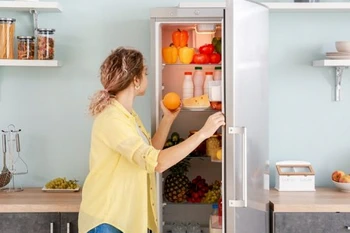
Very often when you're cooking, you need to take food or preparations out of the fridge, to use them in the recipe in progress.
There's nothing tricky about this: you just take them out of the fridge and use them, usually immediately, in the recipe.

But is this really a good method?
1,092 5/5 (3 reviews)
Grade this page:
Keywords for this post:ColdCookingMethodTipStorageTemperature
Last modified on: November 24th 2025
For this post: Comment Follow Ask me a question Send to a friend
Getting out of the fridge early
The whole point of keeping food in the fridge is the temperature it brings to the food - usually 4°C (39°F) - which means a shelf life that would be impossible at room temperature.
Taking food out of the fridge at 4°C to add it to a recipe, or to cook it right away, is not a big problem in itself, but there are 2 small problems:

1) Undercooked meat and fish
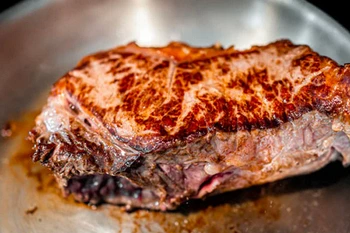
cuisson viande

First of all, if you do this with a piece of meat or fish that you put in the oven right away, it will cook, of course, but not as well as if it were at room temperature.

Once in the frying pan or saucepan, the outside of the piece heats up very quickly, while the inside takes much longer to come to temperature.
To compensate, we prolong cooking, which dries out the surface and sometimes results in an overcooked or undercooked center.

The thermal shock of a very cold piece coming into contact with a very hot pan can also stiffen muscle fibers, especially on fast-cooking meats (steak, escalope, poultry) and harden them unnecessarily.


2) Loss of energy
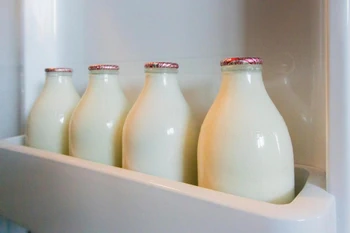
lait au frigo

It's also a (small) waste of energy for nothing.
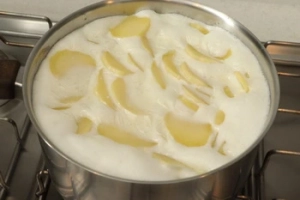
Imagine, for example, that you want to boil 1 liter of milk to make a rice pudding: your milk, taken out of the fridge at 4°C, will take longer to heat than if it were at room temperature.

What to do?

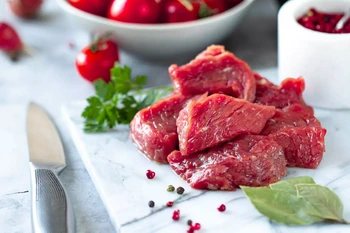
meat on hold

A very simple solution is possible: just take the food out of the fridge 1 hour in advance and leave it at room temperature, while it slowly comes up to temperature.
For meat and fish, slowly returning to room temperature means that heat penetrates more evenly and the core reaches the right temperature more easily.

What's more, by doing this, you'll also save energy, which is good for your wallet and our planet.


To sum up: It's best to take the food you're going to use in your recipe out of the fridge 1 hour beforehand, so it cooks better and uses less energy.

Lasts posts
Butter vs. grease
Butter vs. grease
We often read in a recipe where a pastry is put into a mould that, just before pouring, the mould should be buttered or greased. But what's the difference between these 2 terms?
December 1st 20259655
Who's making the croissants?
When you look at a bakery from the outside, you naturally think that in the bakery, the bakers make the bread, and in the laboratory, the pastry chefs make the cakes. It's very often like that, with each of these professions having quite different ways of working, but sometimes there's also one...
November 23th 2025989
Oven height
Oven height
When we put a dish or cake in the oven, we naturally tend to put it on the middle shelf, and that's what we usually do. But in some cases, this position and height can be a little tricky, so let's find out why.
October 8th 20252,7085
The importance of sieving
In recipes that use a fine powder (flour, powdered sugar, etc.), you'll often see the advice to sift before using it. To sift is to pass the powder in question through a sieve (a very fine strainer) before incorporating it into your recipe. It's often advice, but is it really useful?
September 3rd 20257,5173
The grease spray
The grease spray
As soon as you have something in a recipe that sticks to the mold, the question always arises as to how difficult it is to remove from the mold. There's nothing more frustrating than breaking your cake when unmolding it, because part of it has stuck in the mold. The classic way to avoid this is...
August 26th 20257,0825

Other pages you may also like
Who's making the croissants?
When you look at a bakery from the outside, you naturally think that in the bakery, the bakers make the bread, and in the laboratory, the pastry chefs make the cakes. It's very often like that, with each of these professions having quite different ways of working, but sometimes there's also one...
November 23th 2025989
Butter vs. grease
Butter vs. grease
We often read in a recipe where a pastry is put into a mould that, just before pouring, the mould should be buttered or greased. But what's the difference between these 2 terms?
December 1st 20259655
Oven height
Oven height
When we put a dish or cake in the oven, we naturally tend to put it on the middle shelf, and that's what we usually do. But in some cases, this position and height can be a little tricky, so let's find out why.
October 8th 20252,7085

December 4th 2025195 Sponsored article

November 24th 20253835 Sponsored article
Post a comment or question
Posted by:
I am not a leaving thing

Follow this page
If you are interested in this page, you can "follow" it, by entering your email address here. You will then receive a notification immediately each time the page is modified or a new comment is added. Please note that you will need to confirm this following.
I am not a leaving thing
Note: We'll never share your e-mail address with anyone else.
Alternatively: you can subscribe to the mailing list of cooling-ez.com , you will receive a e-mail for each new recipe published on the site.

Back to top of page