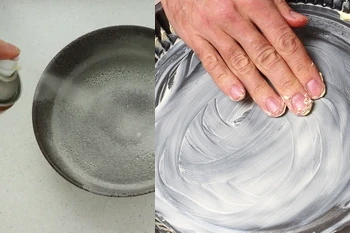
Butter vs. grease


Butter vs. grease
We often read in a recipe where a pastry is put into a mould that, just before pouring, the mould should be buttered or greased.

But what's the difference between these 2 terms?
119
Grade this page:
Keywords for this post:PastryTechniqueMouldFatButterCookingDough
Last modified on: December 1st 2025
For this post: Comment Follow Ask me a question Send to a friend
Butter vs. grease
Let's start with something they both have in common: the aim is to prevent the dough from sticking during baking, and to facilitate removal from the mould afterwards.
To avoid this, you need to coat all the sides of the mold with a thin layer, or film, of fat before pouring in the dough.
During baking, this film will remain in place, reducing or even completely preventing the dough from sticking to the mold.

The difference between greasing and buttering a pastry mould lies essentially in the nature of the product used, and sometimes in the method.

Buttering
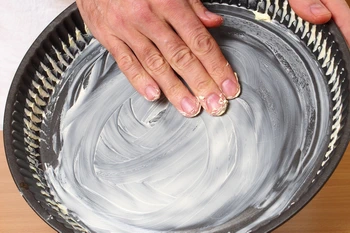
beurrer

"Beurrer" means to apply butter, usually at room temperature, to the sides and bottom of a mold, to create a thin, greasy layer that prevents the dough from sticking.
Buttering is often the traditional method, especially for metal molds, and can sometimes be accompanied by a dusting of flour to further improve demolding.


Grease
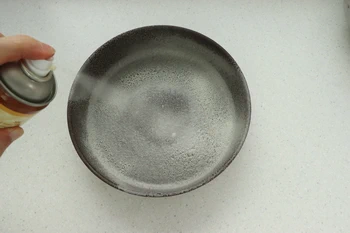
graisser

"Greasing" a mold means applying a more varied fatty substance, such as butter, oil or cooking spray, for the same non-stick function.
Grease is a more generic term that includes butter as well as vegetable alternatives or oils, used according to the type of mold (metal, silicone, etc.) and recipe.
Silicone molds in particular, although often non-stick, can sometimes benefit from a light greasing, especially on first use or for sweet or rich recipes likely to stick.


In a nutshell:

  • Butter = to apply butter (often soft, not melted).
  • Grease = apply a fatty substance (butter, oil, spray, etc.).
Both are designed to prevent the dough from sticking, and to facilitate unmolding.
The choice between the two depends on the type of mold, the recipe, and usage preferences.

These are closely related practices, but "grease" is a broader term that encompasses "butter" among other fat options for preparing a pastry mould.


Lasts posts
Getting out of the fridge early
Very often when you're cooking, you need to take food or preparations out of the fridge, to use them in the recipe in progress. There's nothing tricky about this: you just take them out of the fridge and use them, usually immediately, in the recipe. But is this really a good method?
November 24th 20258715
Who's making the croissants?
When you look at a bakery from the outside, you naturally think that in the bakery, the bakers make the bread, and in the laboratory, the pastry chefs make the cakes. It's very often like that, with each of these professions having quite different ways of working, but sometimes there's also one...
November 23th 2025777
Oven height
Oven height
When we put a dish or cake in the oven, we naturally tend to put it on the middle shelf, and that's what we usually do. But in some cases, this position and height can be a little tricky, so let's find out why.
October 8th 20252,3315
The importance of sieving
In recipes that use a fine powder (flour, powdered sugar, etc.), you'll often see the advice to sift before using it. To sift is to pass the powder in question through a sieve (a very fine strainer) before incorporating it into your recipe. It's often advice, but is it really useful?
September 3rd 20257,2893
The grease spray
The grease spray
As soon as you have something in a recipe that sticks to the mold, the question always arises as to how difficult it is to remove from the mold. There's nothing more frustrating than breaking your cake when unmolding it, because part of it has stuck in the mold. The classic way to avoid this is...
August 26th 20256,8185

Other pages you may also like
Steam for baking bread
What does steam have to do with bread-making? This is not only a bakers' secret, it is something you might not think of at all: if you make bread and bake it like a cake, you will end up with bread, but pale and with a thick, hard crust – a long way from the golden-brown crusty loaf you had in...
June 16th 2021146 K4.5
Is it really necessary to cream egg yolks?
Let’s try and answer a question that crops up in cookery and patisserie, even if it verges on the existential: do the egg yolks in a custard recipe really need to be beaten until pale, or not?
February 28th 201844 K4.3
Remove bones from fish
Let's talk about fish: It's not a scoop, it's much more pleasant to eat fish from which all the bones have been carefully removed, even if it's a rather painful and time-consuming job, the result is worthy of your efforts. Here are some important points to keep in mind.
October 16th 202114 K5
The return of the "Norman hole"
You maybe know the "trou normand", this old gastronomic custom typically French which consists in taking a (small) glass of calvados, generally between the last course and the dessert? It's something that seems a bit anachronistic nowadays, having a glass of an alcohol of more than 60° in the...
December 18th 202114 K4.8
The window-pane test in bread-making
The home bread-makers often ask themselves “Have I kneaded my dough long enough?” . A good question, as dough that is insufficiently kneaded will not rise properly or will fall flat when the top is slashed, which is very frustrating. To know when the dough is ready, one can rely on the length...
June 16th 202196 K 23.9
Post a comment or question
Posted by:
I am not a leaving thing

Follow this page
If you are interested in this page, you can "follow" it, by entering your email address here. You will then receive a notification immediately each time the page is modified or a new comment is added. Please note that you will need to confirm this following.
I am not a leaving thing
Note: We'll never share your e-mail address with anyone else.
Alternatively: you can subscribe to the mailing list of cooling-ez.com , you will receive a e-mail for each new recipe published on the site.

Back to top of page