Not much vinegar
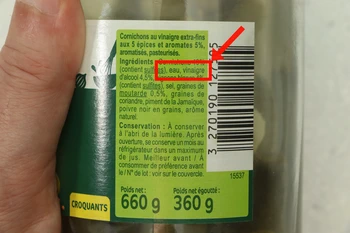
Well, let’s not kid ourselves—the term “in vinegar” is pretty vague. You’d think our pickles are simply sitting in their jar, which is filled with vinegar.Unfortunately, that’s not the case at all, and when you look at the ingredient list, you see that our pickles are actually in a mixture that’s mostly water, with just a little vinegar—likely for economic reasons: water costs nothing, while vinegar costs a little.
It’s not a big deal, of course, but if you (like me) really love pickles for their tangy flavor, this mixture of lots of water and just a little vinegar is pretty bland.
And this applies to everything labeled “in vinegar”: pickles, capers, small onions, etc.
Add More Vinegar
But here’s the good news: you can fix this simply by replacing the water-and-vinegar mixture with pure vinegar.Here’s how to do it with a jar of capers:
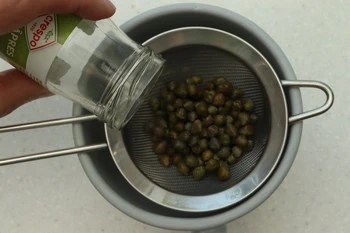
Empty the entire jar into a bowl through a strainer.
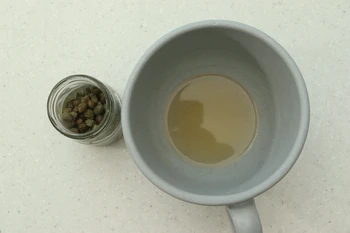
You’ll have the vinegar-and-water mixture at the bottom of the bowl; discard it, and pour the capers back into their jar.
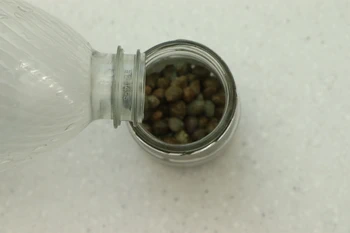
Fill the jar with white vinegar until it covers the capers.
Make sure the capers are completely submerged, then close the lid.
Wait a full week for the vinegar to take effect.
With this change in liquid, you’ll have tangy pickles, capers, or other pickled items in no time.
Note that you don’t have to use white vinegar; any other vinegar you prefer—even flavored vinegar—will work just as well.
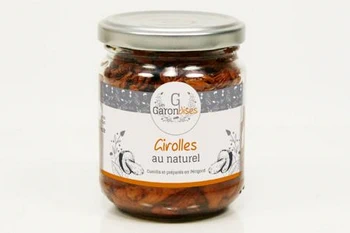
By the way, here’s a tip I got from my dad: you can also find small mushrooms in jars—often chanterelles—but they’re labeled ‘au naturel,’ meaning they’re preserved in a kind of brine.
You can replace this brine with vinegar to make delicious, tangy little mushrooms that you can use just like pickles.
In summary: Pickles, capers, and other store-bought products labeled “in vinegar” are actually preserved in a mixture of (a lot of) water and (a little) vinegar; you can replace this mixture with pure vinegar to get much better results.