The other use for bowl scraper


The other use for bowl scraper
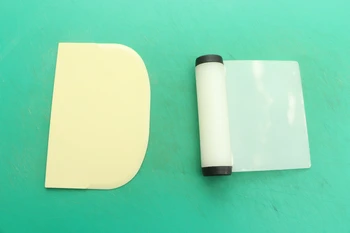
Your kitchen or bakery utensils may include a horn (left) or a pastry cutter (right).
These practical utensils are normally used to scoop the contents of a bowl or salad bowl - the horn - or to cut dough - the pastry cutter.

But they also have another, very practical use - let's see what it is.
2,129 3/5 (1 reviews)
Grade this page:
Keywords for this post:KitchenUtensilEquipmentBoardCuttingBowl scraperPastry cutter
Last modified on: May 9th 2026
For this postComments Lasts posts Follow
For this post: Comment Follow Ask me a question Send to a friend

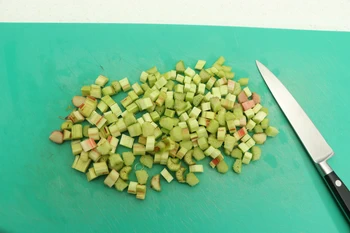
Aliments en petits morceaux sur la planche

Imagine you've just cut a food into small pieces (rhubarb in this case), and you need to pour them into a saucepan.
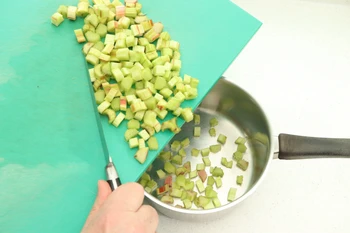


Pushing food from the board into the pan

Naturally, you'll lift up your cutting board and push the contents into the pan, either by hand or with your knife.

It's classic, but it's not very pleasant if your board is heavy, and not very practical, because it's not easy not to put a little on the side.


And then you're not necessarily on a board, but maybe directly on your worktop.
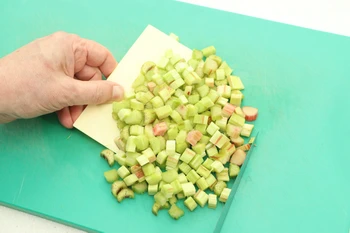


we scoop with the horn

Instead, take a horn or a pastry cutter, and use it to "scoop" what's on the board...
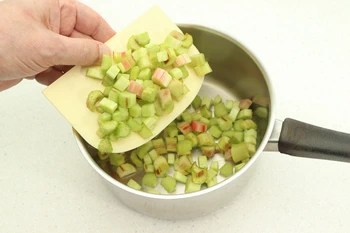


et on dépose dans la casserole

...and place it in the pan, in batches if necessary.


It's very simple and very effective.


In short: Horns and pastry cutters are also very useful for scooping up bits and pieces from work surfaces, or the contents of a chopping board.
Lasts posts
With vinegar?
With vinegar?
When you buy a jar of pickles labeled “in vinegar,” you’re looking for their tangy, crunchy flavor to go with cold cuts, sandwiches, or salads. You expect to find small gherkins preserved in vinegar, with salt and herbs, but is that really the case?
July 15th 20261,4944.8
Congratulate the chef
You've just finished a meal that you really enjoyed. The server approaches with the usual question: “How was it?” And then, as a natural reflex, you simply reply, “Yes, it was very good.” However, when the meal was truly outstanding, this brief exchange deserves a little more. .
July 7th 2026992 25
Cut twice as fast
Cut twice as fast
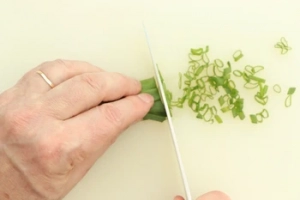
When you need to cut something long into small pieces, for example chopped chives or the stem of a spring onion, there's a simple gesture that doubles your cutting speed. Let's see how.
May 21th 20262,3765
The strange foam of potatoes in milk
As you may have already noticed, when you cook potatoes in milk, especially in small pieces (slices or cubes) for a gratin for example, a surprisingly abundant white foam forms on the surface. Where does it come from?
April 26th 20262,4725
A little leftover butter
Very often when you're making a cake, your recipe will tell you to melt some butter and mix it into the batter - a classic for cookies, cakes, moelleux and the like. And every time you do this, you'll have to butter the baking tin to prevent the dough from sticking during baking. Naturally,...
April 16th 20262,5605
Other articles you might also like
With vinegar?
With vinegar?
When you buy a jar of pickles labeled “in vinegar,” you’re looking for their tangy, crunchy flavor to go with cold cuts, sandwiches, or salads. You expect to find small gherkins preserved in vinegar, with salt and herbs, but is that really the case?
July 15th 20261,4944.8
Oven height
Oven height
When we put a dish or cake in the oven, we naturally tend to put it on the middle shelf, and that's what we usually do. But in some cases, this position and height can be a little tricky, so let's find out why.
October 8th 20258,9545
The  "pith" of the cauliflower
The "pith" of the cauliflower
When using cauliflower in a recipe, there is a lot of preparation work at the beginning: removing the leaves, taking the tops or florets, etc. It's a bit tedious, but in the end you're left with the best of the cauliflower, ready to be used in your recipe.
February 5th 202216 K4.9
The importance of sieving
In recipes that use a fine powder (flour, powdered sugar, etc.), you'll often see the advice to sift before using it. To sift is to pass the powder in question through a sieve (a very fine strainer) before incorporating it into your recipe. It's often advice, but is it really useful?
September 3rd 202511 K3
Making the most of seeds: Dry roasting
In cooking, and particularly in baking, there are a lot of seeds we can use, such as linseed, sesame, poppy, etc. Usually, recipes simply say to add them just as they are to the mixture or dough. To make a seeded loaf, for example, prepare a plain bread dough as usual, then, towards the end of...
January 30th 201565 K4.0
Post a comment or question
Posted by
I am not a leaving thing
Follow this page

Receive an e-mail as soon as this page is modified or receives a new comment.

I am not a leaving thing
We'll never share your e-mail address with anyone else.
Alternatively: you can subscribe to the mailing list of cooling-ez.com , you will receive a e-mail for each new recipe published on the site.

Back to top of page