It's spinning too fast!

When you need to grate or slice vegetables, you generally use an electric machine that does all the work: a food processor, a mixer with a "slicer" extension or similar.
Are these machines really suitable? Generally speaking, yes of course, but there's one criterion that often poses a problem, and that's speed.
Are these machines really suitable? Generally speaking, yes of course, but there's one criterion that often poses a problem, and that's speed.
12 K 5/5 (2 reviews)
Keywords for this post:EquipmentGratingBeatingKneadingSpeedRotationLast modified on: November 12th 2023
It's spinning too fast!
It happens very, very often in the kitchen, when you need to grate, julienne or slice vegetables for one of your recipes.
You wash them, peel them, and then run them through one of your machines using the right disc or grater.
We all do this, and it's only natural, after all: it's super-fast, super-convenient and relatively efficient.
Many of us use what in France is called a "robot-coupe", or equivalent, a food processor with a simple electric motor and cutting discs of various sizes.
Granted, it works very fast - it takes 2 or 3 seconds to grate a carrot, for example - but it has an annoying tendency to sometimes rough up the vegetables, and to make carrot purée and juice at the same time as it grates - you'll find a bit of this at the bottom of the machine's bowl. This is even more pronounced with tender vegetables such as zucchinis or cucumbers.
This isn't too bad for a simple carrot salad, you may say, but you have to admit that what is grated with this tool is necessarily in very, very small, very fine pieces, and sometimes this isn't great for the recipe and its texture.
The problem is that the food processor runs too fast, much too fast for this job, and therefore produces this "purée" effect, which is a bit painful.
It's almost impossible to reduce the speed of the machine (I've tried using a variable speed drive on mine), it starts to work badly, so what can you do?
Well, you "still" have to buy a new electric machine, which takes up a lot of space, but it's a good option.
To sum up: conventional food processors run too fast when cutting or grating vegetables, and are far less efficient than a dedicated vegetable grater that "spins" much more slowly, or even better, a simple and economical hand grater.
You wash them, peel them, and then run them through one of your machines using the right disc or grater.
We all do this, and it's only natural, after all: it's super-fast, super-convenient and relatively efficient.
Many of us use what in France is called a "robot-coupe", or equivalent, a food processor with a simple electric motor and cutting discs of various sizes.
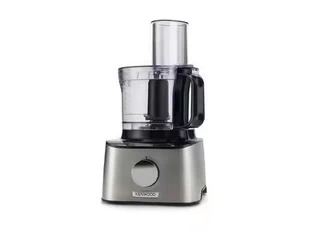
Granted, it works very fast - it takes 2 or 3 seconds to grate a carrot, for example - but it has an annoying tendency to sometimes rough up the vegetables, and to make carrot purée and juice at the same time as it grates - you'll find a bit of this at the bottom of the machine's bowl. This is even more pronounced with tender vegetables such as zucchinis or cucumbers.
This isn't too bad for a simple carrot salad, you may say, but you have to admit that what is grated with this tool is necessarily in very, very small, very fine pieces, and sometimes this isn't great for the recipe and its texture.
The problem is that the food processor runs too fast, much too fast for this job, and therefore produces this "purée" effect, which is a bit painful.
It's almost impossible to reduce the speed of the machine (I've tried using a variable speed drive on mine), it starts to work badly, so what can you do?
The alternatives
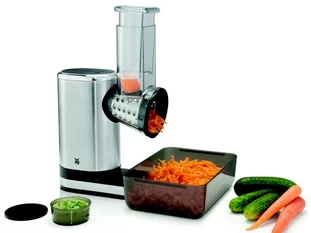
Well, you "still" have to buy a new electric machine, which takes up a lot of space, but it's a good option.
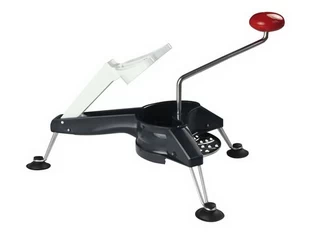
To sum up: conventional food processors run too fast when cutting or grating vegetables, and are far less efficient than a dedicated vegetable grater that "spins" much more slowly, or even better, a simple and economical hand grater.
Lasts posts

The other use for bowl scraper
Your kitchen or bakery utensils may include a horn (left) or a pastry cutter (right). These practical utensils are normally used to scoop the contents of a bowl or salad bowl - the horn - or to cut dough - the pastry cutter. But they also have another, very practical use - let's see what it is.May 9th 2026500

The strange foam of potatoes in milk
As you may have already noticed, when you cook potatoes in milk, especially in small pieces (slices or cubes) for a gratin for example, a surprisingly abundant white foam forms on the surface. Where does it come from?April 26th 2026932

A little leftover butter
Very often when you're making a cake, your recipe will tell you to melt some butter and mix it into the batter - a classic for cookies, cakes, moelleux and the like. And every time you do this, you'll have to butter the baking tin to prevent the dough from sticking during baking. Naturally,...April 16th 20261,0085

A tablet holder
Perhaps you too cook by consulting your recipe on a tablet or phone, and putting it down on your worktop? It's practical, but not the best solution. Here's a look at how you can make an inexpensive, almost universal stand.March 14th 20261,7415

Pre-calibrated pastry dough
When making pie dough (shortbread, shortcrust, sweet...), it's always a good idea to make a lot at once, and then divide it into pieces, which you can freeze. I've already pointed out the mistake not to make, which is to form a ball before freezing. It's difficult to roll out afterwards because...March 9th 20261,5475
Other pages you may also like

Clean your mixer easily
If you use a "bowl" or "blender" mixer, as opposed to a plunger, you've probably noticed that it's a bit of a hassle to clean it after use. And yet, with a simple trick, it can be done very quickly. See how here.June 26th 20249,1085

Drawing a pattern in pastry
Often in the kitchen, in pastry-making, or in baking, we need to trace a pattern on a pastry. It's just a question of aesthetics but it has its effect after baking on a galette, pithiviers, pâté en croute (terrine in a pie crust), etc.May 23th 201938 K4.1

Do you know Yotam Ottolenghi?
Do you know Yotam Ottolenghi? Maybe not, in which case let me tell you a little about him.December 19th 20208,7514.8

Zester like a pro
Have you heard of the microplane? It's an extraordinary tool that allows you to grate very, very finely, and therefore zest with disconcerting ease. Here's some information about it.December 25th 20209,4364.9

The softness of sandwich bread
You're probably familiar with what's known in France as "pain de mie", a very white, molded and rather soft bread, widely used in cooking, particularly for croque-monsieur. Let's find out what it's all about.September 5th 202314 K5
Post a comment or question
Follow this page
Receive an e-mail as soon as this page is modified or receives a new comment.
We'll never share your e-mail address with anyone else.
Alternatively: you can subscribe to the mailing list of cooling-ez.com , you will receive a e-mail for each new recipe published on the site.