Should you pour the new product into the jar?
By doing this—by topping off the product level in the jar—you’ll create an age difference between the old product and the new one.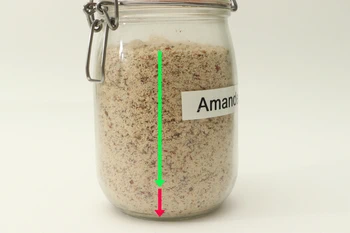
In other words, at the bottom of the jar you’ll have the “old” product, and on top of it you’ll have the “new” one.
This isn’t a big deal, of course, although it depends on the product’s shelf life—that is, its natural tendency to age more or less quickly.
This isn’t a big deal, of course, although it depends on the product’s shelf life—that is, its natural tendency to age more or less quickly.
If the product has a long shelf life (sugar, rice, salt, ...) it’s not a problem, but for more sensitive products (flour, powdered dried fruit, whole grains, ...) it’s more of a hassle, because if you don’t use them often, the contents at the bottom of the jar will eventually become very old.
Can this be avoided?
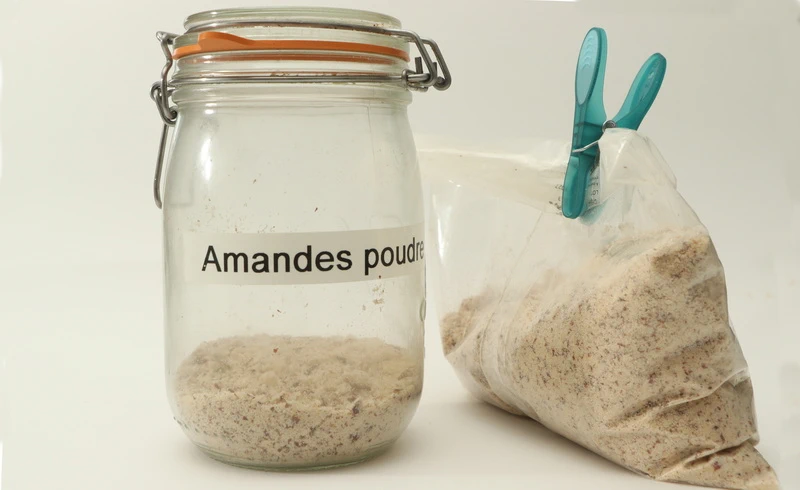
Yes, and it’s easy. Here’s how to do it with a jar of almond flour: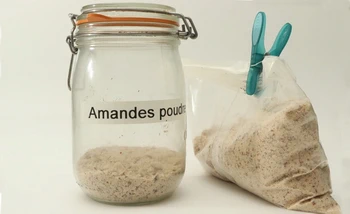
When you notice the jar is almost empty, buy some fresh almond powder.
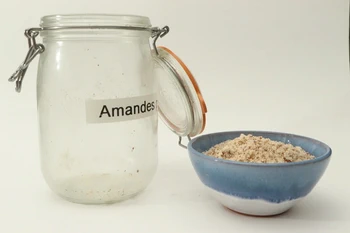
Instead of simply pouring the fresh almond flour into the jar on top of the old batch, first empty the rest of the jar—the old almond flour—into a bowl.
While you’re at it, this might also be a good time to wash the jar.
While you’re at it, this might also be a good time to wash the jar.
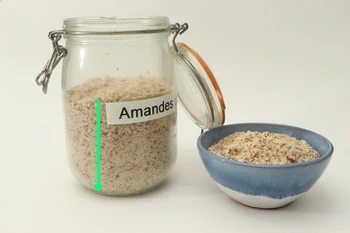
Next, fill the jar with the fresh almond powder, leaving enough room for the old powder.
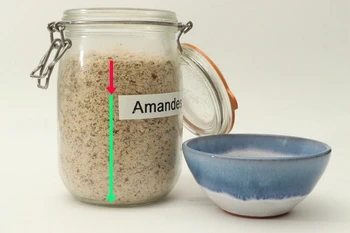
Finally, pour the old almond flour onto the new batch.
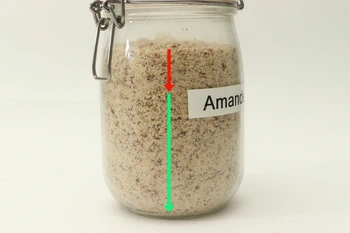
By doing this, the next time you take some almond flour, you’ll use up the old batch first—until it’s gone—and only then start using the new one.
Of course, this applies to solid contents; with liquids, simply shake the jar to mix the old and new liquid products together.
In summary: Don’t add new dry product directly to a jar; set the remaining product aside in a separate bowl to pour over the new product later.