But in practice, this is true at home as well, because even though we usually eat right from the kitchen, dishes cool down quickly—or even very quickly—depending on what they are.

A thin fish fillet, for example, can’t wait more than 1 or 2 minutes once it’s on the serving plate.
Why such a short time? Well, quite simply because if the plate is cold, it will “draw” a good portion of the heat from the fillet, thereby cooling it down fairly quickly.
Paradoxically, it’s the fish fillet that warms the plate.
Why such a short time? Well, quite simply because if the plate is cold, it will “draw” a good portion of the heat from the fillet, thereby cooling it down fairly quickly.
Paradoxically, it’s the fish fillet that warms the plate.

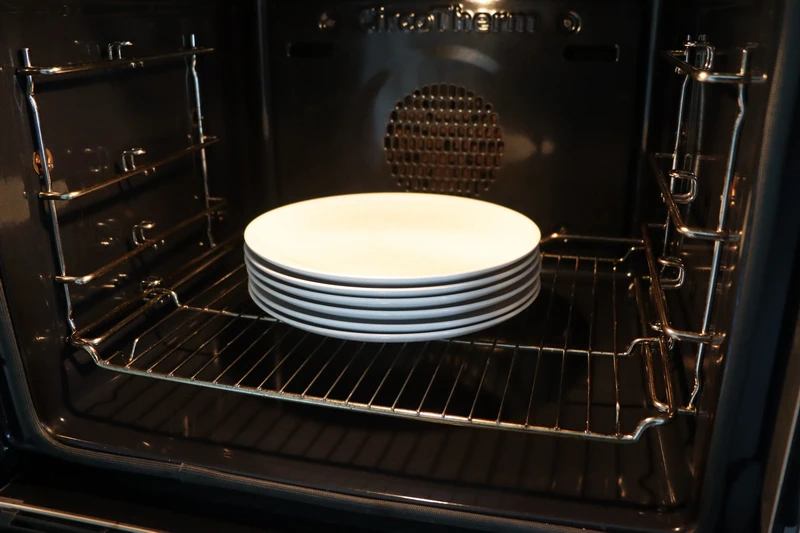
And that’s why, whenever you’re serving a dish directly onto a plate, it’s best to make sure the plate is nice and hot when you plate the food.
If the plate is warm, the heat of your dish will be retained longer, and your plated dishes can wait a few minutes before being served—something that’s impossible with cold plates.
If the plate is warm, the heat of your dish will be retained longer, and your plated dishes can wait a few minutes before being served—something that’s impossible with cold plates.
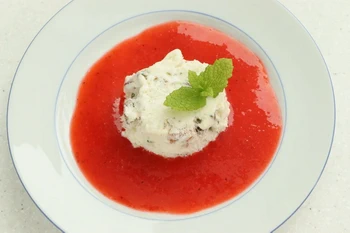
So far, we’ve been talking about hot dishes on hot plates, but it works the other way around as well—a cold dish should be served on a cold plate, of course, based on the same principle.
However, the rules are less strict in this case—to serve a salad or a cold appetizer, a plate straight from the cupboard will work just fine.
But if you’re serving something very cold—or even frozen, like frozen nougat, for example—be careful: a chilled plate—which you can achieve by placing it in the freezer for at least 15 minutes—is absolutely essential.
However, the rules are less strict in this case—to serve a salad or a cold appetizer, a plate straight from the cupboard will work just fine.
But if you’re serving something very cold—or even frozen, like frozen nougat, for example—be careful: a chilled plate—which you can achieve by placing it in the freezer for at least 15 minutes—is absolutely essential.
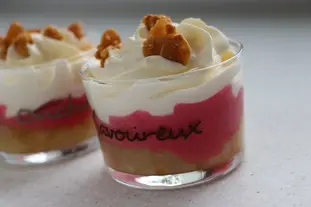
Similarly, we’ve been talking about plates so far, but this rule also applies to all serving dishes.
To serve a frozen dessert in a bowl, for example, you’ll also need to place the bowls in the freezer for at least 15 minutes before plating; they’ll actually develop a light frost, which creates a very nice effect.
To serve a frozen dessert in a bowl, for example, you’ll also need to place the bowls in the freezer for at least 15 minutes before plating; they’ll actually develop a light frost, which creates a very nice effect.