This site uses only a few technical cookies necessary for its operation. By continuing to browse, you accept their use.
To find out more...
To find out more...
Unmoulding cakes while hot
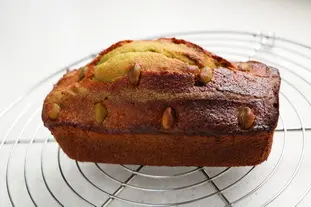
When you make a cake, pound cake or whatever (what bakers call a "travel cake" because it's easy to carry around) you've most likely made a batter, either by hand or in a food processor, which you then pour into a buttered pan.
It's a classic, and I've already talked to you about 2 or 3 tips on cold dough, or how to have a nice opening on the top etc.
That was all about the pre-bake period, but let's look at the post-bake period.
It's a classic, and I've already talked to you about 2 or 3 tips on cold dough, or how to have a nice opening on the top etc.
That was all about the pre-bake period, but let's look at the post-bake period.
40 K 4.6/5 (25 reviews)
Keywords for this post:BakingCookingCakeUnmouldingTipsLast modified on: February 6th 2021
Unmoulding cakes while hot
First of all, the control of the baking process
First of all, the most important thing is the control of the baking process, let's be clear: a baking time indicated for a cake in a recipe is most of the time very approximate. This baking time depends on your oven, the temperature of the oven, the oven itself, the temperature of the batter, the type of pan etc. etc. The only thing missing is the age of the captain...So the only good way to check if a cake is cooked properly is to stick a knife in the middle, if it comes out dry, the cake is cooked, and if not (trace of raw dough) it needs more time.
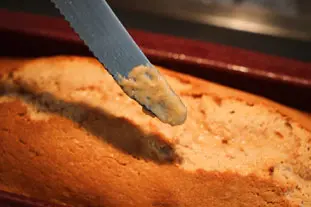
Not enough cooked
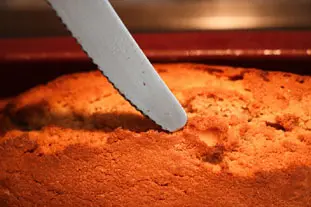
Enough cooked
The unmoulding
Imagine that it is well cooked => you turn off the oven, put on the gloves and take the mould out of the oven to put it on a surface that does not fear heat.And then you wait for it to cool down.
Well no, that would be a mistake, if you do that, the cake will cool in its tin, and badly or rather unevenly, the tin acting as a heat preserver. Worse, it will form on the edges of the mold some kind of steam bubbles that will deform your cake, which gives this kind of defect:
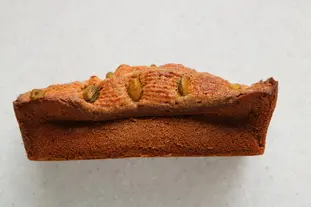
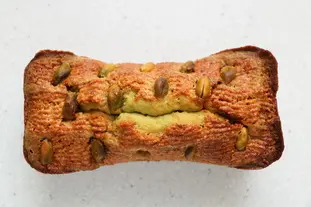
Note that the defect will be accentuated with metal or glass molds, which conduct heat better, and a little mitigated with those made of silicone or paper.
What to do?
It's quite simple, you have to unmould your hot cake, very hot even, and put it immediately on a grid.The easiest way to do this is :
- Once the mold is removed from the oven, wait 1 or 2 minutes that the cake begins to cool and shrink a little, it facilitates the removal
- Keep the gloves on, tip the pan with one hand, put your other hand underneath and shake lightly until the cake falls into your hand
- Turn it over and put it on a rack to cool down in a quiet place
- Bonus: Put the pan to soak right away, to make cleaning easier, and leave the oven door off so that it cools down faster (and the internal fan stops)
It's all very simple, but this way your beautiful cake will cool down faster, and above all without warping.
In summary: You must remove a cake from the oven as soon as it is baked, otherwise it will warp.
Lasts posts

Cut twice as fast
When you need to cut something long into small pieces, for example chopped chives or the stem of a spring onion, there's a simple gesture that doubles your cutting speed. Let's see how.May 21th 20261,824

The other use for bowl scraper
Your kitchen or bakery utensils may include a horn (left) or a pastry cutter (right). These practical utensils are normally used to scoop the contents of a bowl or salad bowl - the horn - or to cut dough - the pastry cutter. But they also have another, very practical use - let's see what it is.May 9th 20261,688

The strange foam of potatoes in milk
As you may have already noticed, when you cook potatoes in milk, especially in small pieces (slices or cubes) for a gratin for example, a surprisingly abundant white foam forms on the surface. Where does it come from?April 26th 20261,892

A little leftover butter
Very often when you're making a cake, your recipe will tell you to melt some butter and mix it into the batter - a classic for cookies, cakes, moelleux and the like. And every time you do this, you'll have to butter the baking tin to prevent the dough from sticking during baking. Naturally,...April 16th 20261,9805

A tablet holder
Perhaps you too cook by consulting your recipe on a tablet or phone, and putting it down on your worktop? It's practical, but not the best solution. Here's a look at how you can make an inexpensive, almost universal stand.March 14th 20262,4795
Other pages you may also like

Soup vs. potage
It's true that we're finally coming out of winter as I write these lines, and that we'll all be making, no doubt, a little less soup and potages, but even if it's out of season, it really is a simple and delicious dish, which is one of the always easy answers to "What's for dinner this (Sunday)...April 9th 202213 K

Tranché, dissociated, failed, in short... missed!
When preparing a sauce or a cream, there's always a (small) risk that the creamy preparation you're working on will suddenly separate into two parts of different textures: a liquid part, for example, and a more or less solid part, or even become lumpy. It's terribly frustrating, but we'll see...June 19th 202315 K5

The right size of zucchini
When you buy zucchini at the market, you're often offered a wide variety of sizes, from very small to very large. But which ones to choose? Here are a few tips.September 9th 202412 K5

Oven height
When we put a dish or cake in the oven, we naturally tend to put it on the middle shelf, and that's what we usually do. But in some cases, this position and height can be a little tricky, so let's find out why.October 8th 20258,2745

The "caves" in the bakery and pastry shop
Maybe you've already done this? You want to make a brioche or a cake with fruit inside, you decide to proceed with your usual recipe, but also to add in the dough pieces of fresh and raw fruit, or whole fruit, for example pieces of apples or pears, good idea. When you bake it, everything seems to...March 27th 202113 K4.9
Post a comment or question
Follow this page
Receive an e-mail as soon as this page is modified or receives a new comment.
We'll never share your e-mail address with anyone else.
Alternatively: you can subscribe to the mailing list of cooling-ez.com , you will receive a e-mail for each new recipe published on the site.