The French baguette and UNESCO


The French baguette and UNESCO
As you may have already read here or there, France has initiated for some time the procedure to try to have the French baguette classified as an intangible world heritage by UNESCO.

When you put it like that, it sounds a bit namby-pamby, and it would be tempting to imagine an American (for example) sniggering at those Frenchies and their damn baguette that they love so much.

But it's not as simplistic as that, because for us French, the relationship with bread is very particular.
15 K 4.9/5 (22 reviews)
Grade this page:
Keywords for this post:BaguetteFranceUnescoWorldHeritage
Last modified on: March 18th 2020
For this post: Comment Follow Ask me a question Send to a friend
The French baguette and UNESCO
First of all, and even if we are used to it, let's not forget that bread is the cornerstone of our diet, even if its consumption has been steadily decreasing for years, it still remains something very important for us, on a daily basis. To be convinced of this, we need only look at the astonishing number of expressions in French that refer to bread: "Manger son pain blanc", "Lui faire passer le gout du pain", "Du pain sur la planche"... etc.

Then our bread, or rather our breads, have an almost unique specificity in the world, it is that they are crispy. We all appreciate a warm bread that comes out of the oven, and that crunches when you cut it or eat it, it doesn't look like much but it's typically French. It's a delight of texture, but also of taste because 80% of the taste of the bread is in the crust. And if you have travelled outside of France, you will have noticed, especially in Anglo-Saxon countries, the poor quality of breads, let's say "crumb bread", under plastic, their frightening composition, and their almost total absence of taste, associated with their suspicious elasticity after 3 weeks in the cupboard.

la baguette un cliché français


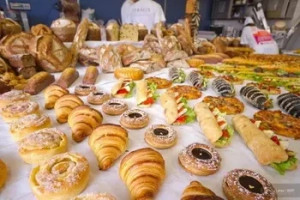
The baguette is even more French, almost Parisian it must be admitted, this long and thin bread, golden and crispy, with a very short shelf life (6h max) that we buy every day, or even several times a day, we are the only ones in the world to do that, and we do it a lot: 32 million baguettes are sold in France every day. So there is no need to specify "French baguette", because a baguette is only French.

It is however very simple as a recipe: water + flour + salt + leaven + a drop of yeast, but all the talent of the baker comes afterwards: long fermentation, short kneading, quality of the products, careful cooking, to finally obtain an exceptional product.
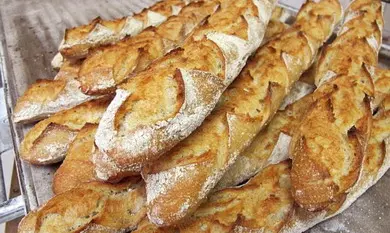
baguette française


I had already mentioned in a previous post that there was baguette and baguette, and that it was necessary at all costs (yes, well, I'm exaggerating a bit, but it's a subject that touches me a lot) to prefer the "traditional" baguette, if possible well baked, because it's so much better for the taste and also for the health.

All this to tell you, that no, this classification request is not a baker's whim, we are indeed with the baguette on a real French specificity, which deserves to be distinguished.

And then, oh, the Neapolitans have already obtained it for the pizza ;-)...

To sum up: The French baguette classified as a UNESCO world heritage site? But of course, what a fair recognition of a so french product !

Lasts posts
Butter vs. grease
Butter vs. grease
We often read in a recipe where a pastry is put into a mould that, just before pouring, the mould should be buttered or greased. But what's the difference between these 2 terms?
December 1st 20252,0765
Getting out of the fridge early
Very often when you're cooking, you need to take food or preparations out of the fridge, to use them in the recipe in progress. There's nothing tricky about this: you just take them out of the fridge and use them, usually immediately, in the recipe. But is this really a good method?
November 24th 20251,4275
Who's making the croissants?
When you look at a bakery from the outside, you naturally think that in the bakery, the bakers make the bread, and in the laboratory, the pastry chefs make the cakes. It's very often like that, with each of these professions having quite different ways of working, but sometimes there's also one...
November 23th 20251,311
Oven height
Oven height
When we put a dish or cake in the oven, we naturally tend to put it on the middle shelf, and that's what we usually do. But in some cases, this position and height can be a little tricky, so let's find out why.
October 8th 20254,0135
The importance of sieving
In recipes that use a fine powder (flour, powdered sugar, etc.), you'll often see the advice to sift before using it. To sift is to pass the powder in question through a sieve (a very fine strainer) before incorporating it into your recipe. It's often advice, but is it really useful?
September 3rd 20258,4013

Other pages you may also like
Steam for baking bread
What does steam have to do with bread-making? This is not only a bakers' secret, it is something you might not think of at all: if you make bread and bake it like a cake, you will end up with bread, but pale and with a thick, hard crust – a long way from the golden-brown crusty loaf you had in...
June 16th 2021148 K4.5
Is it really necessary to cream egg yolks?
Let’s try and answer a question that crops up in cookery and patisserie, even if it verges on the existential: do the egg yolks in a custard recipe really need to be beaten until pale, or not?
February 28th 201844 K4.3
The "pith" of the cauliflower
When using cauliflower in a recipe, there is a lot of preparation work at the beginning: removing the leaves, taking the tops or florets, etc. It's a bit tedious, but in the end you're left with the best of the cauliflower, ready to be used in your recipe.
February 5th 202214 K4.9
How easy is it to chop herbs?
Whenever you have fresh herbs - parsley, chervil, coriander, mint, etc. - to incorporate into a recipe, we tell you to chop them up. In this case, "chopping" means separating the leaves from the stems, keeping only the leaves, and chopping them more or less finely. It's not very complicated,...
September 12th 202313 K5
Maillard reactions
Maillard reactions
This subject cropped up recently in a discussion with my three charming nieces; do you know what Maillard reactions are? With a name like that, they could well be some principle in mechanics, but in fact the term applies to something much closer to all of us: it's what gives food more flavour...
January 28th 201538 K4
Post a comment or question
Posted by:
I am not a leaving thing

Follow this page
If you are interested in this page, you can "follow" it, by entering your email address here. You will then receive a notification immediately each time the page is modified or a new comment is added. Please note that you will need to confirm this following.
I am not a leaving thing
Note: We'll never share your e-mail address with anyone else.
Alternatively: you can subscribe to the mailing list of cooling-ez.com , you will receive a e-mail for each new recipe published on the site.

Back to top of page