Steam for baking bread
What does steam have to do with bread-making? This is not only a bakers' secret, it is something you might not think of at all: if you make bread and bake it like a cake, you will end up with bread, but pale and with a thick, hard crust – a long way from the golden-brown crusty loaf you had in mind.
This is because, when baking bread in an oven, it is vital that right at the start, the loaf goes into an atmosphere that is hot, of course, (around 480°F or 250°C), but also very humid: saturated with steam, in fact. Some of the water suspended in the air inside the oven will settle out evenly on the bread and will react with the dough to form sugars (in the chemical sense). These will help brown the crust in the famous Maillard reactions, producing this bread a more appetising colour, but that is not all. It also helps to form a thin, crisp crust.
This is because, when baking bread in an oven, it is vital that right at the start, the loaf goes into an atmosphere that is hot, of course, (around 480°F or 250°C), but also very humid: saturated with steam, in fact. Some of the water suspended in the air inside the oven will settle out evenly on the bread and will react with the dough to form sugars (in the chemical sense). These will help brown the crust in the famous Maillard reactions, producing this bread a more appetising colour, but that is not all. It also helps to form a thin, crisp crust.
151 K 4.5/5 (38 reviews)
Last modified on: June 16th 2021
Steam for baking bread
So steam is indispensable: there are no beautifully browned, crusty loaves without it. You should note that once the crust is formed in the oven, after about 15 or 20 minutes, the steam is no longer necessary, so there is no need to keep adding it for the rest of the cooking time.
For amateur bakers like us, things are rather different, but here are a few ways to achieve a similar effect:
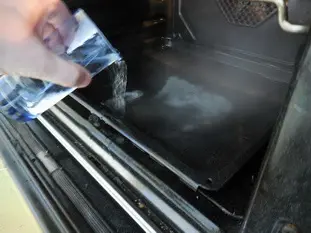
When you put the bread in the oven, before closing the door, pour a large glassful of water into the burning-hot tray (do be careful not to scald yourself),
If all the water has evaporated in under 15 minutes, add a second glassful.
To sum up: Without steam, no beautiful, good bread. You need to have steam in the oven during the first 15 minutes of baking.
Creating steam in the oven
Professional bakers have the advantage of a special "Steam" control on their electric ovens. This injects water into the oven, which lands on very hot metal elements and vaporises to create the steam. They simply press a button and “pshhhh!” , that's it.For amateur bakers like us, things are rather different, but here are a few ways to achieve a similar effect:
Conventional kitchen oven
For this set up, preheat the oven with an empty oven tray sitting directly on the bottom (oven floor or sole) and leave it in the oven to heat up.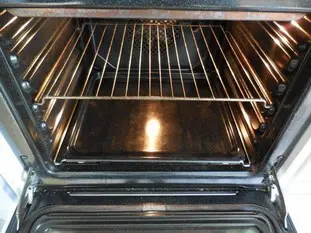
When you put the bread in the oven, before closing the door, pour a large glassful of water into the burning-hot tray (do be careful not to scald yourself),
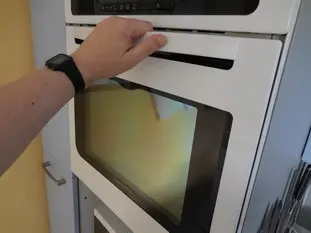
If all the water has evaporated in under 15 minutes, add a second glassful.
Bread oven
If you are fortunate enough to have a proper bread oven, you will need to use a special technique, shown on this page which explains the Steam Machine.To sum up: Without steam, no beautiful, good bread. You need to have steam in the oven during the first 15 minutes of baking.

Lasts posts

With vinegar?
When you buy a jar of pickles labeled “in vinegar,” you’re looking for their tangy, crunchy flavor to go with cold cuts, sandwiches, or salads. You expect to find small gherkins preserved in vinegar, with salt and herbs, but is that really the case?July 15th 20269154.8

Congratulate the chef
You've just finished a meal that you really enjoyed. The server approaches with the usual question: “How was it?” And then, as a natural reflex, you simply reply, “Yes, it was very good.” However, when the meal was truly outstanding, this brief exchange deserves a little more. .July 7th 2026787 25

Cut twice as fast
When you need to cut something long into small pieces, for example chopped chives or the stem of a spring onion, there's a simple gesture that doubles your cutting speed. Let's see how.May 21th 20262,0945

The other use for bowl scraper
Your kitchen or bakery utensils may include a horn (left) or a pastry cutter (right). These practical utensils are normally used to scoop the contents of a bowl or salad bowl - the horn - or to cut dough - the pastry cutter. But they also have another, very practical use - let's see what it is.May 9th 20261,8973

The strange foam of potatoes in milk
As you may have already noticed, when you cook potatoes in milk, especially in small pieces (slices or cubes) for a gratin for example, a surprisingly abundant white foam forms on the surface. Where does it come from?April 26th 20262,2795
Other pages you may also like

A few tips for effective kneading at home
When you have to knead dough for bread or some other recipe, you may well use a food processor or the type of machine known as a stand mixer. The best-known brands are Kenwood and KitchenAid. They are useful tools, but here are a few tips to help you get the best out of them.June 23th 2021288 K 23.8

A stable cutting board
As soon as you have something to cut in the kitchen, the best thing to do is to use a cutting board, it protects your table or work surface, and their material is made to protect the edge of your knife, that is to say that it is soft enough, in short it is the ideal thing. But simply put on the...May 22th 202111 K5

Raising (or leavening) agents
When we want to make a dough or batter rise when baking, either in patisserie or bread-making, we need to use a raising agent or leavening agent, one of which is called leaven. In the context of baking, a raising agent is simply what "makes something rise". It is a substance which, when added to...June 16th 202159 K4.8
With vinegar?
When you buy a jar of pickles labeled “in vinegar,” you’re looking for their tangy, crunchy flavor to go with cold cuts, sandwiches, or salads. You expect to find small gherkins preserved in vinegar, with salt and herbs, but is that really the case?July 15th 20269154.8

Post a comment or question
Follow this page (as 11 people already do)
Receive an e-mail as soon as this page is modified or receives a new comment.
We'll never share your e-mail address with anyone else.
Alternatively: you can subscribe to the mailing list of cooling-ez.com , you will receive a e-mail for each new recipe published on the site.