The grease spray


The grease spray
As soon as you have something in a recipe that sticks to the mold, the question always arises as to how difficult it is to remove from the mold.
There's nothing more frustrating than breaking your cake when unmolding it, because part of it has stuck in the mold.

The classic way to avoid this is to butter the cake copiously, and sometimes even flour the mould to make unmoulding easier.

It's always a bit time-consuming, and you need soft butter, a brush and so on. Is there a quicker way?
9,558 5/5 (1 reviews)
Grade this page:
Keywords for this post:ButterUnmouldSprayOilFilmFatPastries
Last modified on: August 26th 2025
For this post: Comment Follow Ask me a question Send to a friend
The grease spray
Professionals have to deal with this problem every day, so they've opted for a fast, effective system they call "grease spray", which for us amateurs is better known as "demolding spray".

What's a grease spray?
texte alt

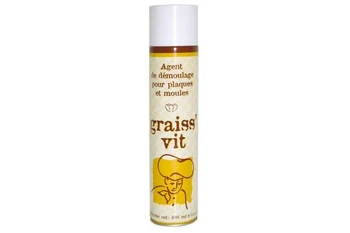
A "grease spray" is a vegetable-based food spray designed to grease molds, baking trays or supports before pouring in a preparation, to ensure easy release from the mold.

It replaces butter or flour for greasing, and is sprayed directly onto the surface to be treated, creating a uniform film that prevents the preparation from sticking.
This ensures rapid demolding, protects molds from corrosion, and makes them easier to clean.

What does it contain?

grease spray composition

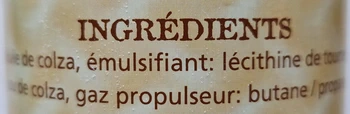
They are generally composed of neutral vegetable oil (rapeseed, soybean, coconut...), sometimes emulsifiers (lecithin), and a propellant gas (nitrogen, butane, propane, depending on the brand).
These sprays transmit neither taste nor odor to the pastry, and are compatible with all types of molds (glass, silicone, metal, etc.).

How do I use it?
texte alt

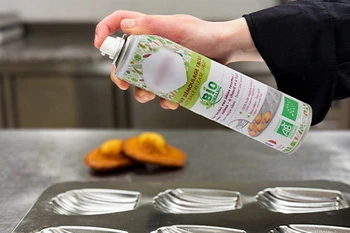
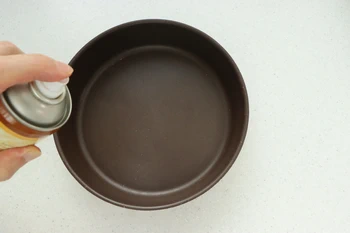
It's as simple as spraying an even film on the bottom and edges of the mold...

texte alt

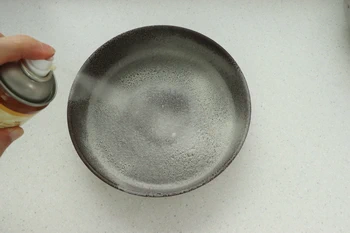
... it takes just a few seconds, turns into a thin layer of white foam, and that's it!

Then all you have to do is pour in the paste.

Where can you buy them?

You can now find them in supermarkets, under the name of "demolding spray", but as always when it comes to equipment, it's best to buy from a professional store, where you'll find the best choice and the best prices.

To sum up: the quickest and easiest alternative to buttering molds is a grease spray, which you'd be well advised to buy from a professional store.
Lasts posts
A tablet holder
A tablet holder
Perhaps you too cook by consulting your recipe on a tablet or phone, and putting it down on your worktop? It's practical, but not the best solution. Here's a look at how you can make an inexpensive, almost universal stand.
March 14th 20267715
Pre-calibrated pastry dough
When making pie dough (shortbread, shortcrust, sweet...), it's always a good idea to make a lot at once, and then divide it into pieces, which you can freeze. I've already pointed out the mistake not to make, which is to form a ball before freezing. It's difficult to roll out afterwards because...
March 9th 20269785
Butter vs. grease
Butter vs. grease
We often read in a recipe where a pastry is put into a mould that, just before pouring, the mould should be buttered or greased. But what's the difference between these 2 terms?
December 1st 20253,0385
Getting out of the fridge early
Very often when you're cooking, you need to take food or preparations out of the fridge, to use them in the recipe in progress. There's nothing tricky about this: you just take them out of the fridge and use them, usually immediately, in the recipe. But is this really a good method?
November 24th 20251,9815
Who's making the croissants?
When you look at a bakery from the outside, you naturally think that in the bakery, the bakers make the bread, and in the laboratory, the pastry chefs make the cakes. It's very often like that, with each of these professions having quite different ways of working, but sometimes there's also one...
November 23th 20251,801

Other pages you may also like
Kitchen ovens
Kitchen ovens
You certainly have one in your kitchen, an oven, the essential tool for all kinds of cooking, whether in the kitchen of course, but also in pastry, bakery, pizza, and many others. Here is some information on its structure and operation.
May 16th 202035 K4.4
Small, regular pieces
When we cook, bake or pastry, we often have to cut food into small pieces, often cubes, to incorporate them into a recipe or preparation. How do you get regular pieces fairly quickly?
November 28th 202012 K4.5
The return of the "Norman hole"
You maybe know the "trou normand", this old gastronomic custom typically French which consists in taking a (small) glass of calvados, generally between the last course and the dessert? It's something that seems a bit anachronistic nowadays, having a glass of an alcohol of more than 60° in the...
December 18th 202116 K4.8
Sugar syrups
Sugar syrups
In cooking, and especially in pastry, we often use sugar syrups, a simple mixture of water and sugar in varying proportions. Here is a presentation of their differences. .
January 17th 202313 K4.8
No need to boil gelatin
Gelatin is a magical ingredient for making light, creamy, structured desserts, yet it's often misused in the kitchen. A common mistake in some recipes is the idea that it needs to be boiled for it to work properly, but this is a mistake indeed: gelatin melts at a much lower temperature, around...
November 21th 20249,6105
Post a comment or question
Posted by:
I am not a leaving thing

Follow this page
If you are interested in this page, you can "follow" it, by entering your email address here. You will then receive a notification immediately each time the page is modified or a new comment is added. Please note that you will need to confirm this following.
I am not a leaving thing
Note: We'll never share your e-mail address with anyone else.
Alternatively: you can subscribe to the mailing list of cooling-ez.com , you will receive a e-mail for each new recipe published on the site.

Back to top of page