Vitamin C against blackening


Vitamin C against blackening
You've probably heard of this tip: to prevent fruit or vegetables from turning brown or black, simply add or sprinkle lemon juice over them.
It's very effective, but why does lemon juice have this effect?
9,877 5/5 (2 reviews)
Grade this page:
Keywords for this post:TipsTricksVitamin CBlackeningBrowningOxidationAntioxidant
Last modified on: July 14th 2023
For this post: Comment Follow Ask me a question Send to a friend
Vitamin C against blackening
Well, that's because it contains vitamin C, which acts as an antioxidant, not the lemon itself or its acidity.

Let's imagine you want to make a fruit purée, for a sorbet or a fruit coulis, pears for example: you peel the pears, remove the cores and blend the whole thing, it's very simple.
The problem is that the pear purée will oxidize very quickly and change color, while the taste will not change (or only slightly), but it will be less appetizing.
Here's the trick: add a pinch of vitamin C to your fruit purée (as you blend), and the result is spectacular.
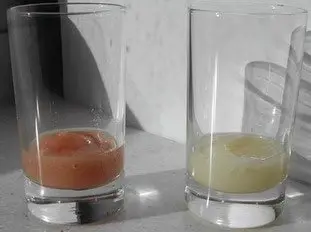
purée de poires

Here's a photo of a pear puree made 5 minutes ago: in the glass on the left, the puree on its own; in the glass on the right, the same puree with a pinch of vitamin C.

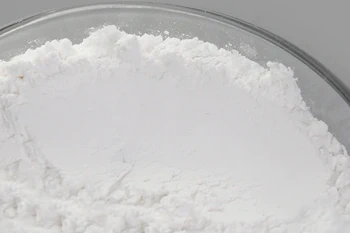
vitamine C

Vitamin C can be found in pharmacies, and you need to ask for some "for food use", i.e. non-aromatized lemon or orange, or in stores for the food trade. It's not very expensive, and you take a pinch each time.

Finally, a few examples of fruits and vegetables where vitamin C works wonders: avocados in guacamole, raw peeled purple artichokes (soaked in water with a pinch of vitamin C), strawberry or apricot coulis, etc.
As a general rule, whenever you have to soak something (vegetables or fruit) to prevent browning, systematically add a pinch or two of vitamin C to the water. You'll be amazed at how effective it is.

To sum up: a pinch of vitamin C in a preparation is highly effective in preventing the browning of fresh produce.
Lasts posts
Butter vs. grease
Butter vs. grease
We often read in a recipe where a pastry is put into a mould that, just before pouring, the mould should be buttered or greased. But what's the difference between these 2 terms?
December 1st 20257285
Getting out of the fridge early
Very often when you're cooking, you need to take food or preparations out of the fridge, to use them in the recipe in progress. There's nothing tricky about this: you just take them out of the fridge and use them, usually immediately, in the recipe. But is this really a good method?
November 24th 20259845
Who's making the croissants?
When you look at a bakery from the outside, you naturally think that in the bakery, the bakers make the bread, and in the laboratory, the pastry chefs make the cakes. It's very often like that, with each of these professions having quite different ways of working, but sometimes there's also one...
November 23th 2025884
Oven height
Oven height
When we put a dish or cake in the oven, we naturally tend to put it on the middle shelf, and that's what we usually do. But in some cases, this position and height can be a little tricky, so let's find out why.
October 8th 20252,5055
The importance of sieving
In recipes that use a fine powder (flour, powdered sugar, etc.), you'll often see the advice to sift before using it. To sift is to pass the powder in question through a sieve (a very fine strainer) before incorporating it into your recipe. It's often advice, but is it really useful?
September 3rd 20257,3773

Other pages you may also like
The green of leeks
The green of leeks
We are all, consciously or not, very sensitive to the colour of our food. That's why a red strawberry will always seem more appetizing than a pale one, even if it's not necessarily true. This is true for red, but it is also true for the green of certain vegetables.
March 30th 202020 K4.0
Should asparagus really be cooked in bunches?
You'll probably read recipes here and there explaining how to cook asparagus "en botte", i.e. in a small package (the famous "botte"). Is this really the right way to cook asparagus?
May 22th 20247,7275
For well opened (puffed) cakes
It's always nice to have a well puffed up cake after baking, not only will it taste good but it looks great too. Let's see how to get this beautiful shape almost every time.
January 23th 201935 K4.2
Drawing a pattern in pastry
Often in the kitchen, in pastry-making, or in baking, we need to trace a pattern on a pastry. It's just a question of aesthetics but it has its effect after baking on a galette, pithiviers, pâté en croute (terrine in a pie crust), etc.
May 23th 201935 K4.1
Beans in primeur
Beans in primeur
As I write this, it is the beginning of the short season for fresh beans. If you've never made them before and you're just starting out (and that's a great idea) you'll find that it's a bit time consuming to prepare, you have to shell them once, remove the beans, scald them to remove the skin (and...
June 4th 202214 K
Post a comment or question
Posted by:
I am not a leaving thing
The 1 comment already posted on this page
  • Thanks for this useful post. Never knew this about Vitamin C; lemon juice is what I was taught but now will get some powder as I don't always have a fresh lemon at hand.
    Posted by Lena july 19th 2023 at 11:58 n° 1

Follow this page
If you are interested in this page, you can "follow" it, by entering your email address here. You will then receive a notification immediately each time the page is modified or a new comment is added. Please note that you will need to confirm this following.
I am not a leaving thing
Note: We'll never share your e-mail address with anyone else.
Alternatively: you can subscribe to the mailing list of cooling-ez.com , you will receive a e-mail for each new recipe published on the site.

Back to top of page