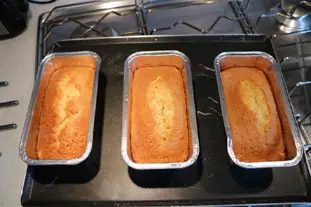
Baking cakes
When you are making a cake, which most likely contains butter (sweet of course...), a pound cake or a moist chocolate cake for example, chances are that as soon as the dough is done, you put it in the pan and bake it immediately.
It's classic, everyone does it that way, and then if, on top of that, you have a few kids around you who are getting impatient, and almost want it to be cooked before going in the oven, when they haven't eaten half of the raw dough before, the pressure is even stronger!
So putting it in the oven right after you've finished kneading your dough is quite classic, but it's actually not a very good thing, for two reasons:
You'll have understood, there's no need to rush: Knead your dough, put the bowl or the mixer bowl in the fridge for 30 minutes (it's often the occasion to do a little washing up...) then only then put it in the oven.
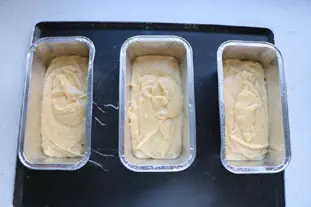
Another option, once the dough is kneaded, put it in a mould, then put the mould in the fridge for 30 minutes. Bake then and only then.
To sum up: Before putting a cake batter in the oven, it is always best to leave it in the fridge for about 30 minutes, as your cake will rise better when baked. In baking, the cold is (almost always) your friend.
It's classic, everyone does it that way, and then if, on top of that, you have a few kids around you who are getting impatient, and almost want it to be cooked before going in the oven, when they haven't eaten half of the raw dough before, the pressure is even stronger!
So putting it in the oven right after you've finished kneading your dough is quite classic, but it's actually not a very good thing, for two reasons:
- The butter is often very soft, especially if the kneading was a bit long and heated the dough, which becomes very soft, and if there are additions in it (grapes for example) they will go down the pan more easily. How to correct this? Put the dough in the fridge for at least 30 minutes.
- The gluten contained in the flour (if there is any in your recipe) under the effect of kneading has begun to structure and "stretch" the dough making it elastic, which is not interesting for a cake because it hinders the rise during cooking. How to correct this? Let the dough rest for at least 20-30 minutes.
You'll have understood, there's no need to rush: Knead your dough, put the bowl or the mixer bowl in the fridge for 30 minutes (it's often the occasion to do a little washing up...) then only then put it in the oven.
Another option, once the dough is kneaded, put it in a mould, then put the mould in the fridge for 30 minutes. Bake then and only then.

To sum up: Before putting a cake batter in the oven, it is always best to leave it in the fridge for about 30 minutes, as your cake will rise better when baked. In baking, the cold is (almost always) your friend.
Lasts posts

The other use for bowl scraper
Your kitchen or bakery utensils may include a horn (left) or a pastry cutter (right). These practical utensils are normally used to scoop the contents of a bowl or salad bowl - the horn - or to cut dough - the pastry cutter. But they also have another, very practical use - let's see what it is.May 9th 2026503

The strange foam of potatoes in milk
As you may have already noticed, when you cook potatoes in milk, especially in small pieces (slices or cubes) for a gratin for example, a surprisingly abundant white foam forms on the surface. Where does it come from?April 26th 2026932

A little leftover butter
Very often when you're making a cake, your recipe will tell you to melt some butter and mix it into the batter - a classic for cookies, cakes, moelleux and the like. And every time you do this, you'll have to butter the baking tin to prevent the dough from sticking during baking. Naturally,...April 16th 20261,0085

A tablet holder
Perhaps you too cook by consulting your recipe on a tablet or phone, and putting it down on your worktop? It's practical, but not the best solution. Here's a look at how you can make an inexpensive, almost universal stand.March 14th 20261,7415

Pre-calibrated pastry dough
When making pie dough (shortbread, shortcrust, sweet...), it's always a good idea to make a lot at once, and then divide it into pieces, which you can freeze. I've already pointed out the mistake not to make, which is to form a ball before freezing. It's difficult to roll out afterwards because...March 9th 20261,5475
Other pages you may also like

Fruits which can ruin your jelly
There are many ways of making a fruit mousse, but one of the simplest is to prepare a fruit jelly (basically a fresh fruit coulis with gelatine) and then mix this jelly before it sets completely with whipped cream. The result is perfect for filling a charlotte, for example. But do beware;...March 6th 201380 K4.0

How to sprinkle well?
When in a recipe you need to sprinkle something, that is to say to spread a fine layer of powder (flour, sugar, etc.) on something, powdered sugar on a pie for example, you will probably use a fine strainer or a sieve, this is the best way to proceed. But is that all?May 23th 202311 K4.7

The 3 secrets of Parisian flan
A flan Parisien, or boulanger, is a simple yet delicious cake. A cream, a mixture of milk, eggs and sugar, is poured into a raw pastry base and baked in the oven until the pastry and cream are cooked. This is the simplest version of the recipe, probably the original one, but nowadays the cream...July 21th 202317 K4.7

Perpetual stock
It's something you have probably have done yourself: cooked or pre-cooked vegetables before adding them to a recipe. This is almost always done the same way: peel the chosen vegetables (carrots, for example), cut them up, boil them in salted water (using a tablespoon or so of coarse salt per litre),...November 22th 201632 K5

When should I change my knife?
I already spoke to you in a previous post about knives, those without which nothing is possible (or almost) in the kitchen, so I'm going to come back to them a bit and try to answer the question "When should I change my knife?November 2nd 201716 K4.7
Post a comment or question
Follow this page
Receive an e-mail as soon as this page is modified or receives a new comment.
We'll never share your e-mail address with anyone else.
Alternatively: you can subscribe to the mailing list of cooling-ez.com , you will receive a e-mail for each new recipe published on the site.