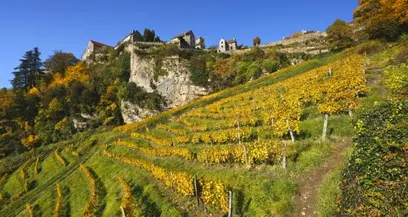
The delicious complexity of Jura wines


The delicious complexity of Jura wines
Do you know the wines of the Jura? Maybe not, it's a small appellation, 2000 hectares, with a production of wines that are both very atypical and very typical, even unique for some of them.

Let me tell you a few words about it.
13 K 4.9/5 (15 reviews)
Grade this page:
Keywords for this post:WinesJuraWhiteSavagninVineyardYellow wineTypicity
Last modified on: May 14th 2022
For this post: Comment Follow Ask me a question Send to a friend
The delicious complexity of Jura wines

Where are they?

carte vignoble jura vignoble du jura


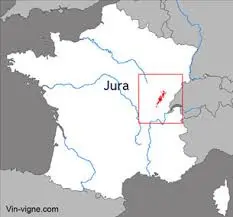
As their name indicates, they all come exclusively from Franche-Comté, from the department of Jura, along a strip 80 for about 6 km on the slopes that lead from the plain to the Jura plateau.
The best known "capital" is the small town of Arbois, which is often referred to as the "wine of Arbois".
The majority of the wines are made from grape varieties that can only be found in this vineyard with little known names such as trousseau, poulsard or savagnin.

Which wines?
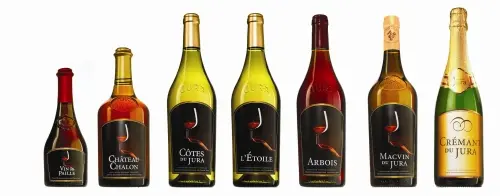
gamme des vins du jura


The vineyard produces a little bit all the colors and all the kinds of wines, classic red, white and sparkling wines, as well as 2 delicious products : the straw wine and the macvin which I will speak to you about another time.
But it is mainly white wines, and in particular a kind of "flagship" wine which is the yellow wine, unique and very very atypical.

The savagnin
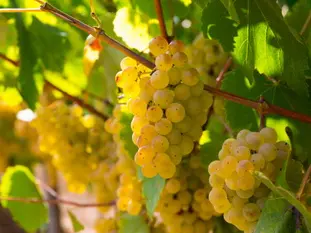
raisins du cépage savagnin


The great grape variety of the Jura is the savagnin, it is a white grape which is used only to make the wines called "Cotes du Jura" (with or without a Chardonnay part), and especially the famous yellow wine.

It's a quite amazing thing that the yellow wine: we harvest the savagnin only, we vinify, we put in wooden barrels and we wait 6 years that the wine matures, oxidizes and reduces, the famous part of the angels (by the way, they live well the angels with all that they recover :-).
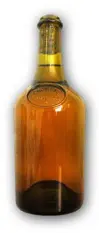
bouteille clavelin

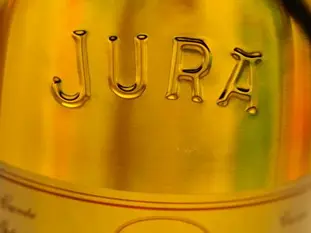
In the end we get a bottle with a particular shape, the clavelin, and a special capacity of 62 cl (vs 75 for the others), which is a wine of great ageing, some bottles of collection have several centuries.
No secret, it is very expensive as a wine, but it is the recognition of a real work of wine making, with a not negligible loss by evaporation.

On the other hand, you don't necessarily need to buy a vin jaune to discover the taste of savagnin, a coteaux du jura is an excellent start, at a very reasonable price.

And the taste?


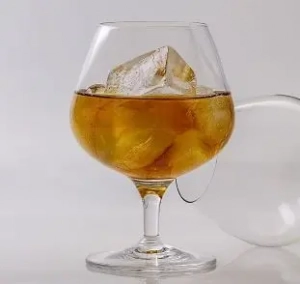
This is where we come to the complexity of these wines, their amber color goes hand in hand with a unique taste, very dry, with very pronounced aromas of nuts.
Tastes that can be (very) disturbing, especially the first time, where we often have two camps in reaction: "What the hell is this thing?" (or "This is not wine!") and on the other hand "Wow, this is incredible!
A wine merchant friend of mine told me that there are no half measures with savagnin, either you love it or you hate it.
But it is the same with all atypical wines, if you are not warned and you expect a classic white wine, like chardonnay, it can be confusing, but you have to try to go a bit beyond the first nose and the first sip...

And in cooking?
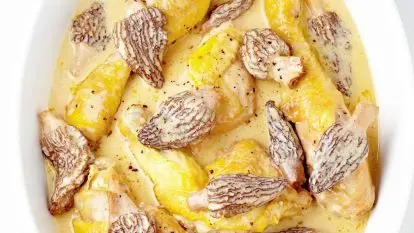
poulet au vin jaune


As much as the tasting of a wine from the Jura (yellow or Côtes du Jura) can be surprising the first time, in cooking its presence in a sauce is a contribution that goes alone and brings a lot.
You may have heard the saying "great wine, great dish", it is also true here, of course the famous "Poularde au vin jaune flanquées de morilles" is one of the emblematic dishes of Comtoise cuisine, but in general Savagnin goes very well with creamy dishes, white meats or fish. Another frequent agreement on the great tables, it is the white asparagus and the yellow wine, and well on the perfect agreement in my opinion: yellow wine, some walnuts, a sourdough bread and Comté cheese (of 18 months minimum if possible).

The celebrity


The relative confidentiality of Jura wines does not prevent them from being showcased in beautiful ways, here are some examples:

- The yellow wine "Chateau-Chalon" (named after a small village that has its own AOC) is considered one of the 5 greatest white wines in the world, no less.
- The same yellow wine discovered by Napoleon III during a meal offered by Metternich had dazzled him, convinced that it was an Austrian wine he congratulated (it is said) Metternich, but the prince explained to him that it came in fact from France.
- Arbois wine has been sung by Jacques Brel (Le dernier repas) and Boris Vian, among others.

I hope that these few lines, of course a rather short description, will make you want to taste it, either in a glass or in a recipe.

To sum up: If you don't know Jura wines yet, try one of these days to open a bottle of white Coteaux du Jura in Savagnin grape variety, maybe it will be the beginning of a discovery...
Lasts posts
XO Cognac Explained: Meaning, Aging, and Flavor Profile
XO Cognac always goes beyond the labels on the bottle: it is often associated with tradition and quality. You get to appreciate the artistry, character and ageing process when you understand what defines this smooth Cognac. The section below tackles everything about XO Cognac, from complex flavour...
January 28th 2026210 Sponsored article
Butter vs. grease
Butter vs. grease
We often read in a recipe where a pastry is put into a mould that, just before pouring, the mould should be buttered or greased. But what's the difference between these 2 terms?
December 1st 20252,3315
Getting out of the fridge early
Very often when you're cooking, you need to take food or preparations out of the fridge, to use them in the recipe in progress. There's nothing tricky about this: you just take them out of the fridge and use them, usually immediately, in the recipe. But is this really a good method?
November 24th 20251,5345
Who's making the croissants?
When you look at a bakery from the outside, you naturally think that in the bakery, the bakers make the bread, and in the laboratory, the pastry chefs make the cakes. It's very often like that, with each of these professions having quite different ways of working, but sometimes there's also one...
November 23th 20251,392
Oven height
Oven height
When we put a dish or cake in the oven, we naturally tend to put it on the middle shelf, and that's what we usually do. But in some cases, this position and height can be a little tricky, so let's find out why.
October 8th 20254,3835

Other pages you may also like
The perfect boiled egg
Making boiled eggs is always a delight and it pleases the young and old alike. This little transgenerational side puts them on the list of "things to do on Sunday evening when you don't know what to do" in many families (including mine)... That said, it's not that simple, you have to pay...
January 30th 202118 K4.7
Beans in primeur
Beans in primeur
As I write this, it is the beginning of the short season for fresh beans. If you've never made them before and you're just starting out (and that's a great idea) you'll find that it's a bit time consuming to prepare, you have to shell them once, remove the beans, scald them to remove the skin (and...
June 4th 202214 K
The preservation of bread
Eating fresh bread is always a delight, the crust crumbles deliciously, you take full advantage of the taste of your bread (80% of this taste is in the crust), it is a fleeting moment to enjoy. Who hasn't already eaten the crouton or croutons of his baguette, on the way back from the bakery? ...
June 11th 202215 K4.7
Should asparagus really be cooked in bunches?
You'll probably read recipes here and there explaining how to cook asparagus "en botte", i.e. in a small package (the famous "botte"). Is this really the right way to cook asparagus?
May 22th 20247,9985
Should potatoes be washed twice?
Let's say you have to make a recipe that includes potatoes, let's say sliced, you'll most likely proceed as follows: Peel the potatoes, wash them, slice them, wash them again, pat them dry and add them to your recipe. But there's a "but": depending on the recipe, the second washing may be a bad...
May 19th 20256,678 15
Post a comment or question
Posted by:
I am not a leaving thing

Follow this page
If you are interested in this page, you can "follow" it, by entering your email address here. You will then receive a notification immediately each time the page is modified or a new comment is added. Please note that you will need to confirm this following.
I am not a leaving thing
Note: We'll never share your e-mail address with anyone else.
Alternatively: you can subscribe to the mailing list of cooling-ez.com , you will receive a e-mail for each new recipe published on the site.

Back to top of page