Fried potatoes or fried mash?
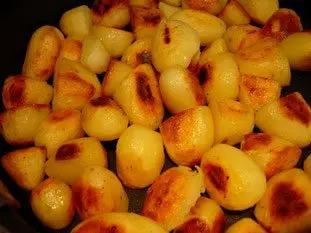
In cooking there are a lot of dishes that appear to be extremely simple but which can actually prove to be very tricky. Amongst those that I'm aware of having this reputation are omelette and fried potatoes.
26 K 4.5/5 (20 reviews)
Keywords for this post:CookingDishPotatoesGrilledRecipeDifficultyTrapLast modified on: February 6th 2011
How can anyone get it wrong? Very easily! You only need to treat it like almost anything else you fry in a pan, and stir the potatoes regularly so that they fry on all sides. This is done with the best of intentions, but alas, if you do this as the potatoes brown and cook – and it's even worse if you have sliced them – they become fragile and break up into smaller and smaller pieces, and you soon have my uncle's famous fried purée.
The aforementioned Uncle Pierre is quite a character, a great self-taught cook who had his own restaurant for many years in the Auvergne. He is larger than life, a great bearded chap with a flamboyant mop of hair, very endearing and a god in the kitchen. Unfortunately, less gifted as a manager than as a cook. I have fond memories of my teenage holidays staying with him, and if I have one regret, it's that I was not as passionate about cooking back then when he was a chef; I'd have been nosing around in his kitchen the whole time…
Whenever Pierre was faced with a young cook looking for a job or training, he liked to ask, “So, what do you know how to do?” (It must be said that Uncle didn't set much score by diplomas and the like) and once the extensive litany of dishes had been reeled off, he would say, “Fine, go on then. Make me some fried potatoes”. Most of the time the youngster, laughing up his sleeve and taking the request as just the whim of an old has-been, would set to work and produce… a fried purée.
I can just imagine my uncle leaving the kitchen with a smile on his face as he went down to the cellar to fetch the appropriate bottle to toast the imminent catastrophe.
This is not just something my uncle did, but a sort of cook's challenge. I once heard Joël Robuchon on television saying that during his time as a chef he often judged discreet omelette or fried potato competitions between cooks.
So, how can you be sure of ending up with proper fried potatoes? Bah – it's actually quite easy: first cover the pan and don't touch it for at least 40 minutes. It's hard to resist, but that's the secret. The more you stir, the more the potatoes break up. Once they're nice and golden brown on the bottom, then – and only then – you can start to turn them over gently to cook on the other side.
This is what Uncle Pierre taught me, and I'll allow myself to add this as well: don't add salt straight away, as this tends to make them stick to the pan, which only makes things more difficult.
For more information and details, see the recipe for fried potatoes.
[Translator's note: fried mashed potato (and its variant “bubble and squeak”) is a fine old traditional British dish in its own right, but involves a rather different method. Jean-Hugues has been informed!]
Lasts posts
When it comes to serving wine, you may (like me) have a fairly simple rule of thumb: red wine at room temperature, and white, rosé, and yellow wines in the fridge until it’s time to serve them. It’s very easy to remember, but it’s a bit simplistic, and you’ll see that there’s a much...
September 23th 20268145
September 23th 20268145

In French cuisine, sauces are a very important part of a recipe—not just a side dish. In fact, they’re so important that, especially since the time of Auguste Escoffier, they’ve been classified into categories. And among these categories are “hot emulsified sauces,” or lukewarm ones. ...
September 9th 20261,2335
September 9th 20261,2335

When plating or serving a dish—whether hot or cold—on a plate, it’s very important to make sure they’re both the right temperature; in other words: if the dish is hot, the plate should be hot, and conversely, if the dish is cold, the plate should be cold. Is this really important? Let’s...
September 2nd 20269713
September 2nd 20269713
When you bake at home—especially when making pie crusts—you’ve probably noticed that it’s quite difficult to work with the dough when it’s hot. It gets soft, is hard to roll out, and breaks or crumples very easily. And this doesn’t just happen when it’s hot—even in a comfortable...
August 26th 20269995
August 26th 20269995
When you buy a jar of pickles labeled “in vinegar,” you’re looking for their tangy, crunchy flavor to go with cold cuts, sandwiches, or salads. You expect to find small gherkins preserved in vinegar, with salt and herbs, but is that really the case?
July 15th 20261,9544.8
July 15th 20261,9544.8
Other articles you might also like
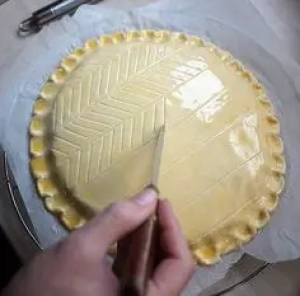
Often in the kitchen, in pastry-making, or in baking, we need to trace a pattern on a pastry. It's just a question of aesthetics but it has its effect after baking on a galette, pithiviers, pâté en croute (terrine in a pie crust), etc.
May 23th 201939 K4.1
May 23th 201939 K4.1
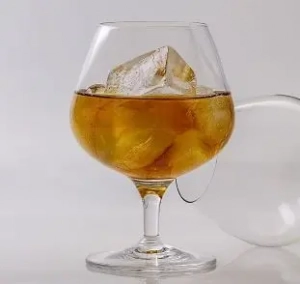
You maybe know the "trou normand", this old gastronomic custom typically French which consists in taking a (small) glass of calvados, generally between the last course and the dessert? It's something that seems a bit anachronistic nowadays, having a glass of an alcohol of more than 60° in the...
December 18th 202117 K4.8
December 18th 202117 K4.8
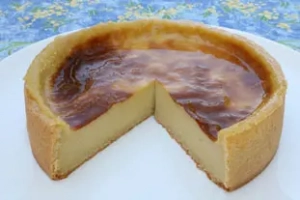
A flan Parisien, or boulanger, is a simple yet delicious cake. A cream, a mixture of milk, eggs and sugar, is poured into a raw pastry base and baked in the oven until the pastry and cream are cooked. This is the simplest version of the recipe, probably the original one, but nowadays the cream...
July 21th 202318 K4.7
July 21th 202318 K4.7
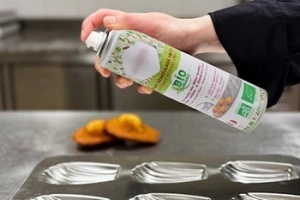
As soon as you have something in a recipe that sticks to the mold, the question always arises as to how difficult it is to remove from the mold. There's nothing more frustrating than breaking your cake when unmolding it, because part of it has stuck in the mold. The classic way to avoid this is...
August 26th 202511 K5
August 26th 202511 K5
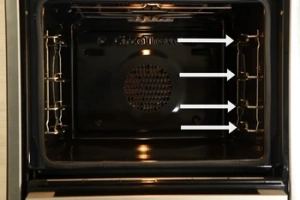
When we put a dish or cake in the oven, we naturally tend to put it on the middle shelf, and that's what we usually do. But in some cases, this position and height can be a little tricky, so let's find out why.
October 8th 20259,7345
October 8th 20259,7345
Post a comment or question
Follow this page
Receive an e-mail as soon as this page is modified or receives a new comment.
We'll never share your e-mail address with anyone else.
Alternatively: you can subscribe to the mailing list of cooling-ez.com , you will receive a e-mail for each new recipe published on the site.