Cutting soft cheeses


Cutting soft cheeses
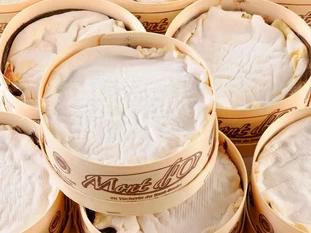
As you may have already noticed, when you have to use a "soft" cheese in a recipe - their exact name is "soft cheese" - such as Camembert, Munster or Mont d'or, it's not easy to make anything other than thick slices.
9,357 5/5 (2 reviews)
Grade this page:
Keywords for this post:CheeseStuffCutCrustDecrustSoftColdSoft paste
Last modified on: February 20th 2024
For this post: Comment Follow Ask me a question Send to a friend
Cutting soft cheeses
Well, yes, you can, with small cubes for example, but unfortunately you run the risk of obtaining a kind of cheese purée...
It's quite normal though, with this kind of cheese, unlike Comté for example, the center is very tender, and so is the rind, which is usually eaten (yes, it's a question of taste too).
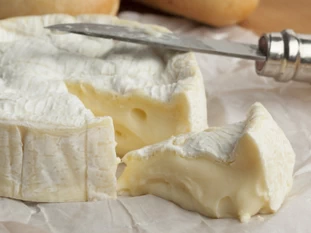
camembert coulant


So with these "soft" cheeses, it's impossible to cut them properly?
Well, normally not, but there's a very simple trick.

The trick is to put the cheese in the freezer for 1 or 2 hours, depending on its size. Say 1 hour for a cheese like camembert or saint-marcellin, and more like 2 hours for a cheese like mont d'or.

At the end of this time, the cheese has hardened, but is not frozen, so it can be cut much more easily.

This is particularly effective if you need to decrust (remove the rind from a cheese), which is normally almost impossible, but after this passage in the cold becomes perfectly feasible.
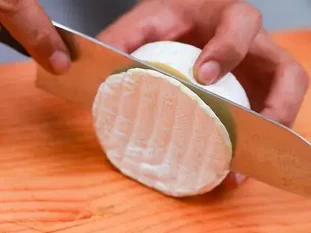
découpe camembert


Be careful not to freeze the cheese completely, as this time it would be almost impossible to cut as it would be too hard.
The best thing to do is put it in the freezer for 1 hour to start with, then come and feel around to see if it has firmed up sufficiently. If not, go back for another 30 minutes or 1 hour, and so on until you reach the right texture.

Once you've finished cutting the cheese, you'll need to let it come back to temperature, unless you're going to cook it afterwards, in which case there's no need.

To sum up: to be able to cut a soft cheese, nothing beats a little time in the freezer to firm it up.
Lasts posts
Who's making the croissants?
When you look at a bakery from the outside, you naturally think that in the bakery, the bakers make the bread, and in the laboratory, the pastry chefs make the cakes. It's very often like that, with each of these professions having quite different ways of working, but sometimes there's also one...
November 23th 2025643
Oven height
Oven height
When we put a dish or cake in the oven, we naturally tend to put it on the middle shelf, and that's what we usually do. But in some cases, this position and height can be a little tricky, so let's find out why.
October 8th 20252,1505
The importance of sieving
In recipes that use a fine powder (flour, powdered sugar, etc.), you'll often see the advice to sift before using it. To sift is to pass the powder in question through a sieve (a very fine strainer) before incorporating it into your recipe. It's often advice, but is it really useful?
September 3rd 20257,1813
The grease spray
The grease spray
As soon as you have something in a recipe that sticks to the mold, the question always arises as to how difficult it is to remove from the mold. There's nothing more frustrating than breaking your cake when unmolding it, because part of it has stuck in the mold. The classic way to avoid this is...
August 26th 20256,7005
Cake moulds
Cake moulds
When we make a cake, or a cake of the same rectangular shape, we usually take out our usual mould and tell ourselves that the recipe is anyway "for a cake", but is it really that simple?
August 25th 20256,7355

Other pages you may also like
Butter doesn't make you fat, unless you eat too much of it.
Whenever I'm discussing cooking and recipes, there is one idea which comes up frequently, like this: "Oh no! But that's got butter in it" (I should add, for the sake of accuracy, that this is something I hear more frequently from women, who are almost all concerned with keeping their figure). ...
March 26th 201245 K4.5
Pastry doughs
Pastry doughs
To make a classic tart, you'll need a pastry of course, and if you don't use puff pastry (normally reserved for "fine", in french, tarts), you'll have a choice of shortcrust, shortbread, sweetcrust or "à foncer". Let's take a look at the differences between these four.
August 16th 20248,4744.4
How to zest a fruit?
You will have no doubt noticed that many recipes call for the zest of citrus fruit. The zest is that outer layer of the skin which adds so much flavour to a dish. There are many different ways to peel off the zest and various tools are available. Here is a summary of the “dos and don'ts” of...
November 5th 201347 K3.8
Steam for baking bread
What does steam have to do with bread-making? This is not only a bakers' secret, it is something you might not think of at all: if you make bread and bake it like a cake, you will end up with bread, but pale and with a thick, hard crust – a long way from the golden-brown crusty loaf you had in...
June 16th 2021146 K4.5
The golden-brown finish on puff pastry
Let's take a look at the tricky matter of producing puff pastry with an attractive, golden-brown finish. French pastry chefs call this "dorure" (literally, "gilding"). Behind this quirky term there lurks a real problem (and the solution): when using puff pastry (pâte feuilletée) for a pie, or...
February 8th 201847 K 24.6
Post a comment or question
Posted by:
I am not a leaving thing

Follow this page
If you are interested in this page, you can "follow" it, by entering your email address here. You will then receive a notification immediately each time the page is modified or a new comment is added. Please note that you will need to confirm this following.
I am not a leaving thing
Note: We'll never share your e-mail address with anyone else.
Alternatively: you can subscribe to the mailing list of cooling-ez.com , you will receive a e-mail for each new recipe published on the site.

Back to top of page