The cake and the raisins


The cake and the raisins
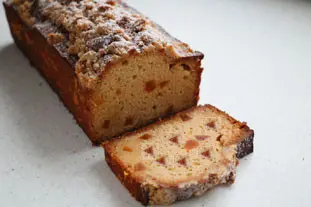
When you bake a cake, like a cake or pound cake, you may have already encountered this thorny problem: How to make sure that the raisins, or the candied fruits, or any other small filling, do not fall to the bottom of the pan during the baking process?
15 K 4.7/5 (22 reviews)
Grade this page:
Keywords for this post:CakeCakePastryRaisinsDoughFilling
Last modified on: May 31th 2019
For this post: Comment Follow Ask me a question Send to a friend
The cake and the raisins
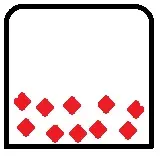
It's not that simple to have this even distribution, basically you want to have this:

raisins régulièrement répartis


Rather than this:

raisins irrrégulièrement répartis


For this, or rather to avoid the second option, bakers all learn in their training the following method (let's say you want to make a cake with diced candied orange):

You put the diced candied oranges (or raisins, etc.) in a bowl, and sprinkle them with a little flour taken from the flour provided for the cake batter. Note that no extra flour is added.
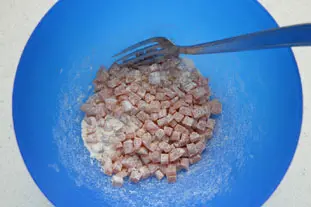
dés d'oranges confites et farine mélangée


Mix everything carefully, with a fork, to coat all the orange cubes with flour.
This is quite easy with candied fruit because it is sticky, if you use raisins that are a little too dry, to which the flour does not stick, moisten them very slightly (1 tablespoon of water) before pouring in the flour.

Then make your cake batter as normal, add the excess flour from the bowl, and just before putting into the tin, add the floured candied fruit, mix quickly, put into the tin and bake.

Well, I have to be honest with you, it's not a 100% sure method, the great Gaston Lenôtre himself, when he explains this method in his books, adds at the end "in theory...".

So I propose you another method that I like:
  1. You make your dough normally, once finished, you do not put it in the mold, but in the refrigerator for at least 1 hour
  2. At the end of this time, the dough will have firmed up because of the butter it contains => add the raisins or candied fruits at this time, and stir well (be careful, it is much harder than a dough coming out of the mixer)
  3. Put it in a mould and put it in the oven immediately
You can try these 2 methods, and choose the one that seems to you the most effective, or, why not, combine the two.

To sum up: To prevent the filling of a cake from falling to the bottom of the pan when baking, you have to either coat the filling with a little flour, or incorporate the filling into a very cold dough, or both.
Lasts posts
Butter vs. grease
Butter vs. grease
We often read in a recipe where a pastry is put into a mould that, just before pouring, the mould should be buttered or greased. But what's the difference between these 2 terms?
December 1st 20256615
Getting out of the fridge early
Very often when you're cooking, you need to take food or preparations out of the fridge, to use them in the recipe in progress. There's nothing tricky about this: you just take them out of the fridge and use them, usually immediately, in the recipe. But is this really a good method?
November 24th 20259595
Who's making the croissants?
When you look at a bakery from the outside, you naturally think that in the bakery, the bakers make the bread, and in the laboratory, the pastry chefs make the cakes. It's very often like that, with each of these professions having quite different ways of working, but sometimes there's also one...
November 23th 2025863
Oven height
Oven height
When we put a dish or cake in the oven, we naturally tend to put it on the middle shelf, and that's what we usually do. But in some cases, this position and height can be a little tricky, so let's find out why.
October 8th 20252,4455
The importance of sieving
In recipes that use a fine powder (flour, powdered sugar, etc.), you'll often see the advice to sift before using it. To sift is to pass the powder in question through a sieve (a very fine strainer) before incorporating it into your recipe. It's often advice, but is it really useful?
September 3rd 20257,3373

Other pages you may also like
The window-pane test in bread-making
The home bread-makers often ask themselves “Have I kneaded my dough long enough?” . A good question, as dough that is insufficiently kneaded will not rise properly or will fall flat when the top is slashed, which is very frustrating. To know when the dough is ready, one can rely on the length...
June 16th 202196 K 23.9
The beautiful story of the croissants
As you may have already noticed, cooking, baking and pastry-making are full of stories or legends, usually very romantic, about this or that product or recipe. This is often the case for named recipes, for example tarte tatin, peach melba, paris-brest and many others, but it also applies to very...
October 10th 201819 K5
Oven height
Oven height
When we put a dish or cake in the oven, we naturally tend to put it on the middle shelf, and that's what we usually do. But in some cases, this position and height can be a little tricky, so let's find out why.
October 8th 20252,4455
Maillard reactions
Maillard reactions
This subject cropped up recently in a discussion with my three charming nieces; do you know what Maillard reactions are? With a name like that, they could well be some principle in mechanics, but in fact the term applies to something much closer to all of us: it's what gives food more flavour...
January 28th 201538 K4
Well-cooked meat
Well-cooked meat
Have you ever noticed that if you like your meat well done, it invites strange looks? For instance, in a restaurant, when asked “How would you like that cooked?” If you reply, “Well done,” it is almost as if you are swearing….
May 21th 201134 K 14.4
Post a comment or question
Posted by:
I am not a leaving thing

Follow this page
If you are interested in this page, you can "follow" it, by entering your email address here. You will then receive a notification immediately each time the page is modified or a new comment is added. Please note that you will need to confirm this following.
I am not a leaving thing
Note: We'll never share your e-mail address with anyone else.
Alternatively: you can subscribe to the mailing list of cooling-ez.com , you will receive a e-mail for each new recipe published on the site.

Back to top of page