Cooking scallops
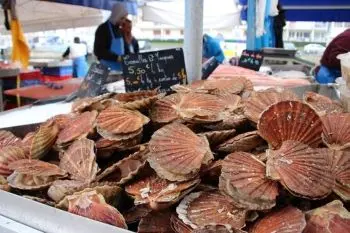
We are, as I write these lines, in the season of the scallops, if you like that it is necessary to benefit from it as much as possible, although it is alas not cheap.
I like scallops a lot, but I have to admit that it has naturally little taste, or, said differently, it takes the taste of what you cook it in, but it takes it well!
That's why cooking scallops with cream of sorrel for example, started in butter if possible, is absolutely delicious because the scallop, or rather the nut, goes very well with its sauce and the cooking material.
I like scallops a lot, but I have to admit that it has naturally little taste, or, said differently, it takes the taste of what you cook it in, but it takes it well!
That's why cooking scallops with cream of sorrel for example, started in butter if possible, is absolutely delicious because the scallop, or rather the nut, goes very well with its sauce and the cooking material.
14 K 5/5 (13 reviews)
Keywords for this post:CookingScallopsShellShellfishSeafoodPlanchaGrilledOvenLast modified on: November 23th 2021
Cooking scallops
If you prepare them, whatever the recipe, you will sooner or later be confronted with the problem of cooking.
And that's normal, that's the difficulty of preparation, and there are two main ways:
It is cooked on a hot surface without excess, or even in the oven, to preserve the pearly side already mentioned.
Of course they think that going further in cooking is a heresy, this school is very present in the chic restaurants.
At Robuchon's, in one of his books, the scallops are only cooked for 2 minutes in the oven.
Well, I don't hide from you that I have trouble with these short cooking times, but it is a school that respects itself.
The "burning" side plus "each side" gives very colorful and tasty nuts, but let's not forget the butter. By the way, the plancha is ideal for this cooking.
It should be done quickly if possible, otherwise an overcooked scallop becomes hard as a tennis ball.
Of course these are not the only cooking methods, you can consider many others such as in papillotes or poached for example, you just have to keep in mind that the scallops must be cooked, but not too much ...
Then, and whatever the chosen method, you have to think about 3 things:
1) Rinse the nuts well
2) Remove the "foot" (small hard part on the side of the scallop)
3) Dry the nuts (paper towel or cloth), top and bottom, before cooking them.
This is not always easy, but remember that you need "dry" nuts to start cooking, it always works better.
It's just a question of taste, personally I find it a bit dull and not very interesting, I don't keep them, but that's debatable.
In some old recipes, a bit dated, the coral is used separately to constitute a sauce base, a bit like a thickener, but it's the same observation, not much gustatory interest, rather aesthetic.
To sum up: cooking scallops is always a delicate matter, you have to be precise and relatively quick.
And that's normal, that's the difficulty of preparation, and there are two main ways:
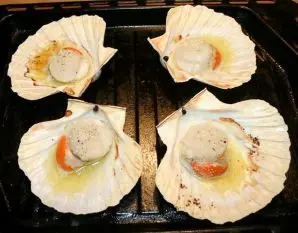
It is cooked on a hot surface without excess, or even in the oven, to preserve the pearly side already mentioned.
Of course they think that going further in cooking is a heresy, this school is very present in the chic restaurants.
At Robuchon's, in one of his books, the scallops are only cooked for 2 minutes in the oven.
Well, I don't hide from you that I have trouble with these short cooking times, but it is a school that respects itself.
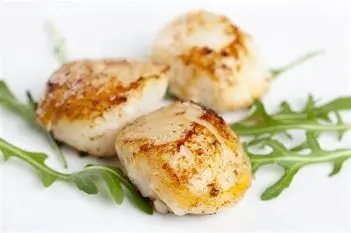
The "burning" side plus "each side" gives very colorful and tasty nuts, but let's not forget the butter. By the way, the plancha is ideal for this cooking.
It should be done quickly if possible, otherwise an overcooked scallop becomes hard as a tennis ball.
Of course these are not the only cooking methods, you can consider many others such as in papillotes or poached for example, you just have to keep in mind that the scallops must be cooked, but not too much ...
Then, and whatever the chosen method, you have to think about 3 things:
1) Rinse the nuts well
2) Remove the "foot" (small hard part on the side of the scallop)
3) Dry the nuts (paper towel or cloth), top and bottom, before cooking them.
This is not always easy, but remember that you need "dry" nuts to start cooking, it always works better.
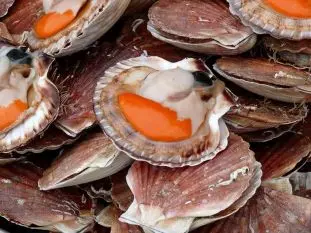
It's just a question of taste, personally I find it a bit dull and not very interesting, I don't keep them, but that's debatable.
In some old recipes, a bit dated, the coral is used separately to constitute a sauce base, a bit like a thickener, but it's the same observation, not much gustatory interest, rather aesthetic.
To sum up: cooking scallops is always a delicate matter, you have to be precise and relatively quick.
Lasts posts

Cut twice as fast
When you need to cut something long into small pieces, for example chopped chives or the stem of a spring onion, there's a simple gesture that doubles your cutting speed. Let's see how.May 21th 20261,718

The other use for bowl scraper
Your kitchen or bakery utensils may include a horn (left) or a pastry cutter (right). These practical utensils are normally used to scoop the contents of a bowl or salad bowl - the horn - or to cut dough - the pastry cutter. But they also have another, very practical use - let's see what it is.May 9th 20261,620

The strange foam of potatoes in milk
As you may have already noticed, when you cook potatoes in milk, especially in small pieces (slices or cubes) for a gratin for example, a surprisingly abundant white foam forms on the surface. Where does it come from?April 26th 20261,839

A little leftover butter
Very often when you're making a cake, your recipe will tell you to melt some butter and mix it into the batter - a classic for cookies, cakes, moelleux and the like. And every time you do this, you'll have to butter the baking tin to prevent the dough from sticking during baking. Naturally,...April 16th 20261,8015

A tablet holder
Perhaps you too cook by consulting your recipe on a tablet or phone, and putting it down on your worktop? It's practical, but not the best solution. Here's a look at how you can make an inexpensive, almost universal stand.March 14th 20262,3985
Other pages you may also like

Balancing flavours
In the kitchen, we sometimes use ingredients that can be a little overwhelming in taste. Grilled lardons, for example, are very good, they give a great taste to a lot of recipes where they are added, but you have to be objective, they're still pretty fatty!November 7th 20209,9715

The proper use of a pastry bag
Ever used a pastry bag? Handy, isn't it, but unfortunately not very easy to fill. In fact, to be comfortable with this tool, you'd need 3 or 4 arms, which isn't very common. Does that mean it's a goner? No, of course not. Here are 2 or 3 tips to help you get comfortable with it.December 5th 20209,9224.7

The infinite variety of salads
Making a salad for a meal, a few ingredients of your choice and a sauce to bind it all together is still one of the best ways to cook something really good quickly and simply. And since there is often a "fresh" aspect with the vegetables in the ingredients, not only does it taste good, but it's...March 13th 202111 K4.6

How to break eggs properly?
It is a very common gesture in pastry, bakery and of course cooking: breaking eggs to incorporate them into a recipe. You have eggs (which professionals call "shell eggs" to differentiate them from liquid eggs in cartons or cans), and you must break them to incorporate the contents into your...June 26th 202116 K4.8

In praise of Mont d'Or cheese
Do you know the Mont d'Or, this extraordinary cheese from the Haut-Doubs in France, with a unique taste and appearance, which can be eaten both raw and cooked? I'll tell you a few words about it, and with some tips on how to choose it and cook it. .November 27th 202114 K5
Post a comment or question
Follow this page
Receive an e-mail as soon as this page is modified or receives a new comment.
We'll never share your e-mail address with anyone else.
Alternatively: you can subscribe to the mailing list of cooling-ez.com , you will receive a e-mail for each new recipe published on the site.