Remove bones from fish


Remove bones from fish
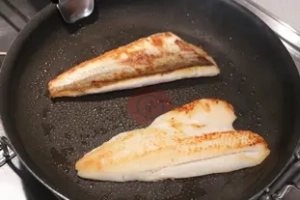
Let's talk about fish: It's not a scoop, it's much more pleasant to eat fish from which all the bones have been carefully removed, even if it's a rather painful and time-consuming job, the result is worthy of your efforts.

Here are some important points to keep in mind.
14 K 5/5 (14 reviews)
Grade this page:
Keywords for this post:FishBonesClawFleshFilletFish steak
Last modified on: October 16th 2021
For this post: Comment Follow Ask me a question Send to a friend
Remove bones from fish

the tool

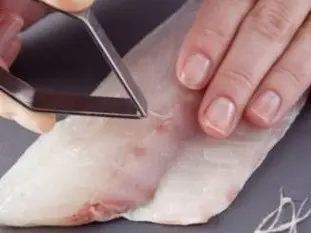
No secret, you absolutely need a pair of fishbone pliers, it's really the essential tool with enough strength to be able to catch and remove a fishbone, usually very well hung.
You can use a pair of universal or fine-nosed tweezers, but it's not very practical (don't even think about recycling an old pair of tweezers, you won't get anywhere).
If you have to buy one, go for a stainless steel one, like the one on the picture above.

Finding the fish bones

This is not so easy, as they are usually almost invisible.
The best way is to put the fillet or the fish in front of you (on a plate if possible) and to pass your finger along the flesh, if the bones are not visible, on the other hand they can be felt.

Removing them

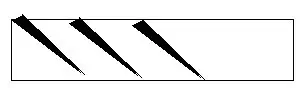
That's the trick, it's not obvious but there is a kind of "direction", fish bones are generally oriented from the head to the tail, from the central bone and slightly curved, schematically, like this:
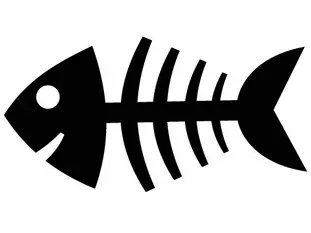
arêtes de poisson


Add to this that there is a tip and a point, the tip being significantly larger than the point.
If you magnify it a lot, a fish bone looks like this:
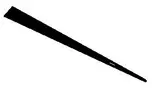
arête zoom

When you have a fillet in front of you, it's the inside of the fish that you see, the fishmonger has cut the flesh along the central bone, and then all the other bones are cut off as well.
So they are in the flesh like this:

arêtes dans la chair

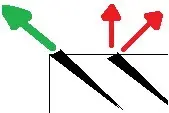
To remove them without too much difficulty, you have to go in the right direction with the pliers, grabbing the big end, and pull in the opposite direction.

arêtes sens de retrait

In other words, in the direction indicated by the green arrow, but especially not in the direction of the red arrows.
Well, it wouldn't be dramatic either, but 1) it will be harder and 2) you might tear off some flesh with the edge, which would be a shame.

So you have to do that for all the bones, until you run your finger over them and you don't feel any point, then move on to the next fillet.
Yes, yes, it's long and painful, but what a pleasure afterwards at the table...

To sum up: To remove the bones from a fillet or a fish steak, you need a good pair of bone grippers, and pull them in the opposite direction of their location.
Lasts posts
Butter vs. grease
Butter vs. grease
We often read in a recipe where a pastry is put into a mould that, just before pouring, the mould should be buttered or greased. But what's the difference between these 2 terms?
December 1st 20256575
Getting out of the fridge early
Very often when you're cooking, you need to take food or preparations out of the fridge, to use them in the recipe in progress. There's nothing tricky about this: you just take them out of the fridge and use them, usually immediately, in the recipe. But is this really a good method?
November 24th 20259555
Who's making the croissants?
When you look at a bakery from the outside, you naturally think that in the bakery, the bakers make the bread, and in the laboratory, the pastry chefs make the cakes. It's very often like that, with each of these professions having quite different ways of working, but sometimes there's also one...
November 23th 2025863
Oven height
Oven height
When we put a dish or cake in the oven, we naturally tend to put it on the middle shelf, and that's what we usually do. But in some cases, this position and height can be a little tricky, so let's find out why.
October 8th 20252,4435
The importance of sieving
In recipes that use a fine powder (flour, powdered sugar, etc.), you'll often see the advice to sift before using it. To sift is to pass the powder in question through a sieve (a very fine strainer) before incorporating it into your recipe. It's often advice, but is it really useful?
September 3rd 20257,3353

Other pages you may also like
The golden-brown finish on puff pastry
Let's take a look at the tricky matter of producing puff pastry with an attractive, golden-brown finish. French pastry chefs call this "dorure" (literally, "gilding"). Behind this quirky term there lurks a real problem (and the solution): when using puff pastry (pâte feuilletée) for a pie, or...
February 8th 201847 K 24.6
Coarsely chopped herbs
Although we are in the middle of winter as I write these lines, you should not hesitate to make salads at this time, it is actually quite simple, rather fast, and so pleasant. A while ago, I already told you that a salad is a salad, but a salad with herbs is immediately something much better:...
January 9th 202114 K4.9
The baker always gild twice
I've already told you about gilding, the beaten whole egg that is spread with a brush on anything that needs to brown in the oven: puff pastry, pastries, etc. and that professionals use a lot, I'm going to come back to this to clarify a bit how to do it, and give you a professional tip.
June 9th 201935 K4.2
Tranché, dissociated, failed, in short... missed!
When preparing a sauce or a cream, there's always a (small) risk that the creamy preparation you're working on will suddenly separate into two parts of different textures: a liquid part, for example, and a more or less solid part, or even become lumpy. It's terribly frustrating, but we'll see...
June 19th 202312 K5
The window-pane test in bread-making
The home bread-makers often ask themselves “Have I kneaded my dough long enough?” . A good question, as dough that is insufficiently kneaded will not rise properly or will fall flat when the top is slashed, which is very frustrating. To know when the dough is ready, one can rely on the length...
June 16th 202196 K 23.9
Post a comment or question
Posted by:
I am not a leaving thing

Follow this page
If you are interested in this page, you can "follow" it, by entering your email address here. You will then receive a notification immediately each time the page is modified or a new comment is added. Please note that you will need to confirm this following.
I am not a leaving thing
Note: We'll never share your e-mail address with anyone else.
Alternatively: you can subscribe to the mailing list of cooling-ez.com , you will receive a e-mail for each new recipe published on the site.

Back to top of page